Choose a plan from below, subscribe, and get access to our member benefits!
Monthly plan
Yearly plan
Member Benefits Include
Collective Representation
Legal Representation
Grievance Resolution
Professional Development
Health and Safety Advocacy
Social and Networking Events
Governmental Advocacy
Job Security and Seniority Advocacy
Information and Resources
Open Door Policy
Workers Representation on a National Scale
Collective Bargaining Representation
The union negotiates collective bargaining agreements on behalf of its members to ensure fair wages, benefits, and working conditions. Shop stewards act as liaisons between the workers and the union leadership.
Legal Representation
Members have access to legal assistance for workplace-related issues, such as unfair dismissal, discrimination, and safety violations.
Grievance Resolution
The SKNT&LU supports members in resolving workplace grievances, advocating for fair treatment and due process.
Professional Development
The union provides opportunities for members to enhance their skills and career prospects through various educational programs.
Health and Safety Advocacy
A key focus is on promoting safer work environments and compliance with health and safety standards.
Social and Networking Events
Members can participate in events that foster community and provide networking opportunities.
Governmental Advocacy
The union lobbies for policies and legislation that protect and advance workers' rights and interests.
Job Security and Seniority Advocacy
Efforts are made to ensure fair practices regarding layoffs, promotions, and other job changes, often prioritizing seniority and performance.
Information and Resources
The union keeps members informed about labor rights, industry developments, and union activities through various communication channels.
Open Door Policy
Members have direct access to union representatives for guidance and support, with non-members also encouraged to engage with the union.
Workers Representation on a National Scale
The SKNT&LU represents workers at the national level on various committees, influencing policies and regulations affecting labor and employment.
BASSETERRE, St.Kitts (Tuesday 2nd April 2024)-General Manager of the Solid Waste Management Corporation (SWMC) Nelvin Maynard says illegal dumping is currently a pressing issue.
‘..today I stand before you to bring your attention to a very pressing issue that has been affecting the health, the beauty, and the overall sustainability of our community- Illegal dumping,” he stated during a video posted on the corporation’s official Facebook page on Saturday 30th March 2024 while out in the field of work, on the occasion of The International Day of Zero Waste.
“We are here at the Basseterre Valley Aquifer and it is disheartening to witness the increasing instances of illegal dumping in this area. The Aquifer is where water is issued to Basseterre and its surrounding areas, particularly Newtown… the Seventh-day Adventist family school.”
General Manager of the Solid Waste Corporation (SWMC) Nelvin Maynard seen in work mode with SWMC frontline workers at the Basseterre Valley
Maynard added: “So it’s really bothersome to see the reckless actions of individuals who choose to dump illegally in this area. Some of the items that we discovered this morning are what we accept at the landfill only at a small rate of five EC dollars.”
“I’m talking about washing machines, stoves, mattresses, vehicle parts, household items, green waste; we all accept these at the landfill. So, they’re not to be thrown here at the Aquifer. So, we are urging the public to desist from illegal dumping in this area,” he noted.
At the end of the public awareness video, the SWMC General Manager is seen in work mode with SWMC frontline workers as he expresses: “So we must act swiftly and decisively to protect our environment” while they all give a reminder that “Waste Matters. You Matter Most!”
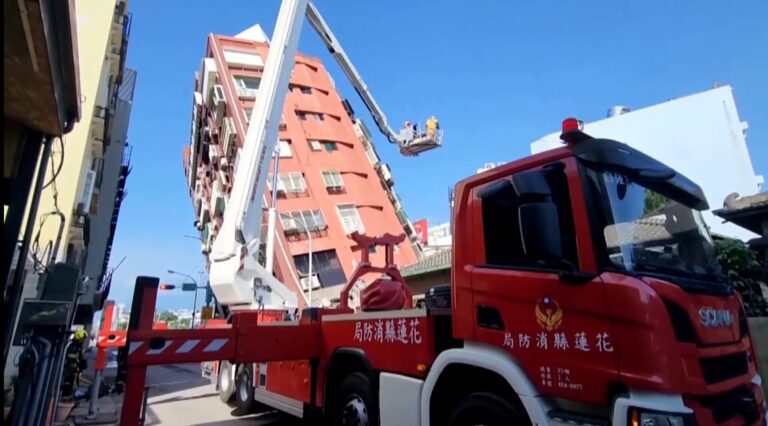
BASSETERRE St.Kitts (Thursday 4th April 2024)- Described to be the biggest earthquake in Taiwan (Republic of China) in at least twenty-five (25) years at a 7.2 magnitude resulting in deaths, injuries and missing persons reports, concerns over the safety of St.Kitts-Nevis nationals were put to rest following official word that everyone is accounted for and safe.
Prime Minister and Minister of National Security Terrance Drew, via his official Facebook page, said in part: “I know it’s after 3 in the morning but I had to call our Ambassador to Taiwan, HE Donya Francis, to enquire about our citizens there. He reported that all are well.”
An aftermath scene following the 7.2 earthquake in Taiwan on Wednesday 3rd April 2024 (video screenshot via Reuters.com)
Dr. Drew encouraged to keep our SKN national in prayers as well as to also pray for all of the people of Taiwan and wish them well.
Media reports- up to press time for this media house- indicated that there had been at least nine (9) deaths and over 900 people injured while a minibus carrying fifty (50) workers was missing.
Meanwhile, the Embassy of Saint Christopher (Saint Kitts) and Nevis in Taiwan, R.O.C via a statement issued informed that all St.Kitts-Nevis National in the country were all accounted for and safe.
“We wish to inform our family members, friends, and well- wishers that ALL nationals of Saint Kitts and Nevis who are currently in the Republic of China (Taiwan) are safe and accounted for after the earthquake that occurred this morning (7:58 am Taiwan time) on Wednesday, April 3rd, 2024.”
Furthermore, it was also stated that: “Our thoughts and prayers are with the people and government of Taiwan during their time of recovery. We have faith in their resilience and tenacity. We extend our deepest sympathy and solidarity to the families of those who have sadly passed away, and to the injured.”
The Embassy advises the nationals in Taiwan to adhere to the advisories of Taiwanese authorities and contact the Embassy for assistance if needed whilst giving the ‘dch’ safety reminder used in public caution when it comes to such a natural disaster occurrence: “Remember to keep safe and drop, cover, and hold on.”
Known globally as the oldest Christian holiday, Easter is a principal holy holiday season which seals the faith of believers of Jesus Christ.
While there continues to be in some people’s mind debate about the name ‘Easter’, many Christians hold fast that through the recollection captured in Biblical scriptures, the events surrounding the divine significance of the resurrection in the aftermath of crucifixion is factual and is the bigger picture of this holiday period.
There are many people who frown upon the commercialization of Easter stemming from the symbolism of the ‘Easter Bunny’ and ‘Easter Eggs’ because such takes away from the education and righteous imagery about the Lord’s Lenten season.
It goes with saying therefore that the importance of the true meaning of Easter requires some soul searching and Holy Scripture reading-specifically in the Books of Matthew, John and Luke- in delving deeper into the religious roots which pulls away from the superficial understanding of the type of tradition and rituals.
For this Easter season, on Good Friday many people look forward to eating salt fish or mackerel or any other type of fish with ground provisions and dumpling-coconut or otherwise. But the questions must be asked: Is there sufficient acknowledgement of the day here in St.Kitts and Nevis among our people in what is known to be a dominant Christian society? Do children (and even some adults) know the significance of flying their kites this time of year? and Do you know the reason behind eating fish?
In a nutshell for the benefit of those who may not know: kite flying is symbolism of ‘Christ is Risen’. Fish is the favoured and differently viewed meat as many Christians, through tradition, abstain from meaty flesh with the view that Jesus Christ sacrificed his flesh for the deliverance of humanity.
Hence as Easter approaches, the special period must not be viewed or experienced as just another holiday to mark on one’s calendar. Instead, Easter must be treated as a time of rediscovery, reflection and renewal.
Easter at its core celebrates and give observance to the resurrection of Jesus Christ; a pivotal occurrence through teachings symbolizing triumph over death with the promise of course of eternal life after leaving this earthly dwelling.
Cradled by such comforting promise, there are many people who sing with much enthusiasm while attending funeral services the lyrics “No grave can keep/hold my body down” of the popular Gospel tune ‘Ain’t No Grave Can Hold My Body Down’.
Looking deeply into the significance of Easter, there is an undeniable theme of universal acceptance for people of all backgrounds and belief on topics of hope, renewal and redemption. Hope among humanity is a common bonding factor which provides a beacon of light in moments of challenges and dark periods of life in this world. And for some people, the resurrection is a constant beacon of light.
For this Easter, it is highly encouraged that there be a sense of discovery or even rediscovery of what this Holy Season means. Such an exercise of course will be a personal one to some people while others united through unwavering strength and conviction continue to assemble at their house of worship in collective reverence, closing out the Lenten season.
BASSETERRE, St.Kitts (Wednesday 27th March 2024) – The National Recycling Program joint effort “has already made strides in changing behaviors and attitudes towards recycling and waste management.”
So said Minister of Sustainable Development, Environment and Climate Action and Constituency Empowerment, Senator Dr. Joyelle Clarke in a statement made during the National Assembly held on Tuesday 26th March 2024, having informed that the Cabinet has approved the three-phased ban on single-use plastic items across the Federation as she encouraged the continuation of such behaviours and attitudes towards environmental protection.
“While I need not delve into the pervasive challenge of plastic pollution, I am compelled nonetheless to remind every Kittitian and Nevisian that every small action collectively creates major movements in recycling, upcycling and limiting the use of plastics.”
“The small changes today will lead to incremental improvements in human and environmental health. Our students collected thousands of pounds of plastic bottles last year. Our landfill is bursting at the seams with plastics. What was once thought a viable solution to paper-based products has now become the gravest problems for our oceans,” Dr. Clarke stated.
According to the Environment Minister: “Tuesday, 26 March 2024, marks a significant milestone for environmental protection for St. Kitts and Nevis. This action is a testament to our unwavering commitment to protect our natural environment and foster a sustainable future for all.”
She highlighted that the announcement of this first phase of the ban has been the result of extensive consultations with stakeholders from the private sector to community groups and backed by solid research and evidence of the detrimental impacts of plastic pollution.
As shared by her, the Ministry will present the NCEMA- National Conservation and Environmental Management Bill very shortly.
“This bill will address the legislative needs for supporting the ban on single-use plastics. However, we are also anticipating the tabling of the Environmental Protection Restriction on Single-Use Plastics Bill, which when introduced would outline a comprehensive framework for banning specific plastic items.”
Dr. Clarke said that the implementation of this ban is structured in three strategic phases, ensuring a smooth transition for our citizens and businesses towards more sustainable alternatives.
In addition, she informed that each phase includes a ban on importation on select items, followed by a three-month window leading to a distribution ban.
As shared by her: Phase one-Ban on the importation of single-use plastic t-shirt shopping bags. As of December 31st, 2024, imports of t-shirt shopping bags will be banned in the Federation. This is followed by a prohibition on the sale and distribution of t-shirt plastic bags on March 31st, 2025.
Phase 2-Ban on the importation of foam food containers and plastic straws. Effective April 30th, 2025. The sale and distribution of plastic straws and foam containers will be prohibited starting July 31st, 2025.
Phase 3- Banning the importation of plastic cups, plastic plates, and plastic utensils on August 31st, 2025. A ban on their sale and distribution. Effective November 30th, 2025.
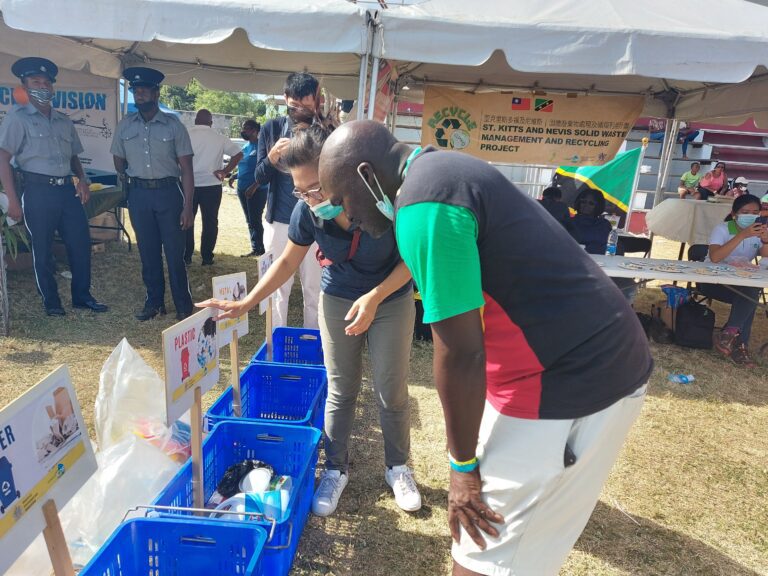
In making reference to the government’s partners in this process, she commented: “Our commitment is further demonstrated through the implementation of the Solid Waste Management and Recycling Project executed with our bilateral partners and the Taiwan ICDF Program, which has led on our National Recycling Program. This joint effort has already made strides in changing behaviors and attitudes towards recycling and waste management.”
Dr. Clarke indicated that “Our success over the next year as we move through each phase requires the collective effort of every citizen, every business, and every visitor to our islands.”
“We look forward and we will support a plastic-free environment…We look to each ministry to collect and recycle and eliminate plastic bottles from your meetings and conferences. Simple collective steps towards a circular economy and a sustainable island state. We call upon you, every citizen, every petitioner and every new vision to employ and embrace alternatives to single use plastics, to think consciously about the products you use and dispose of and to support our local initiatives aimed at preserving our environment,” she encouraged.
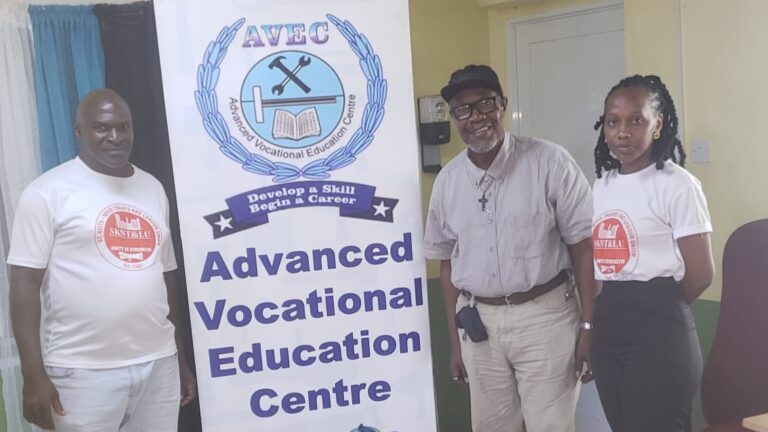
BASSETERRE, St.Kitts (Wednesday 27th March 2024)-The St.Kitts-Nevis Trades and Labour Union (SKNT&LU) on Wednesday 27th March 2024 conducted a session on ‘The Importance and Benefits of Unionised Bodies Within The Skilled Industry’ as part of the Work Readiness Workshop put on by the Advanced Vocational Education Centre (AVEC) at its campus located at Taylor’s Range in Basseterre, St.Kitts.
The workshop was held under the theme ‘Strengthening TVET, Charting Sustainable Changes and Anchoring Positive Transformation in Industries for the Next Generation.’
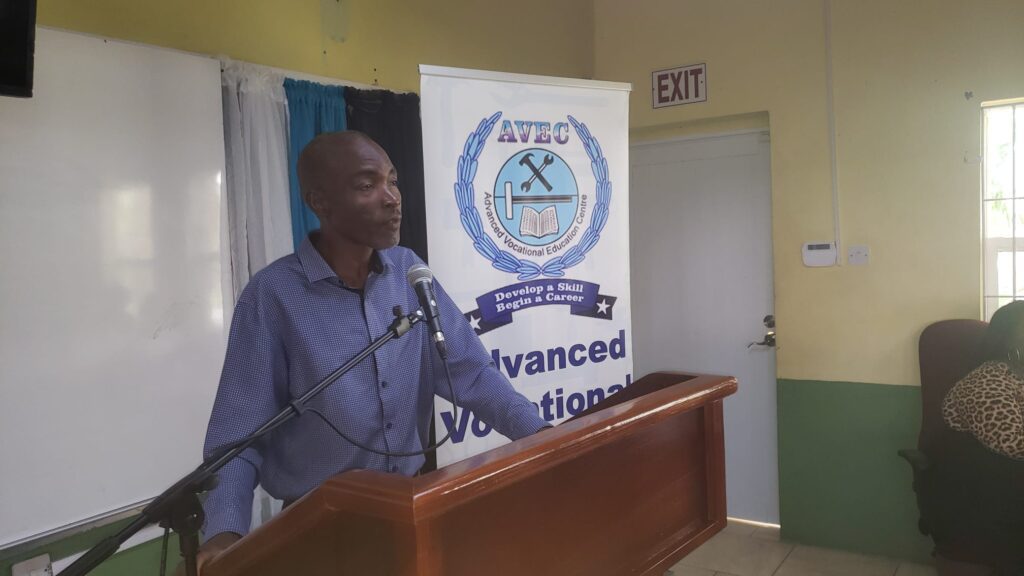
SKNT&LU First Vice President Curtis Francis, the union’s representative on the Technical Vocational Education and Training (TVET) Council was a presenter.
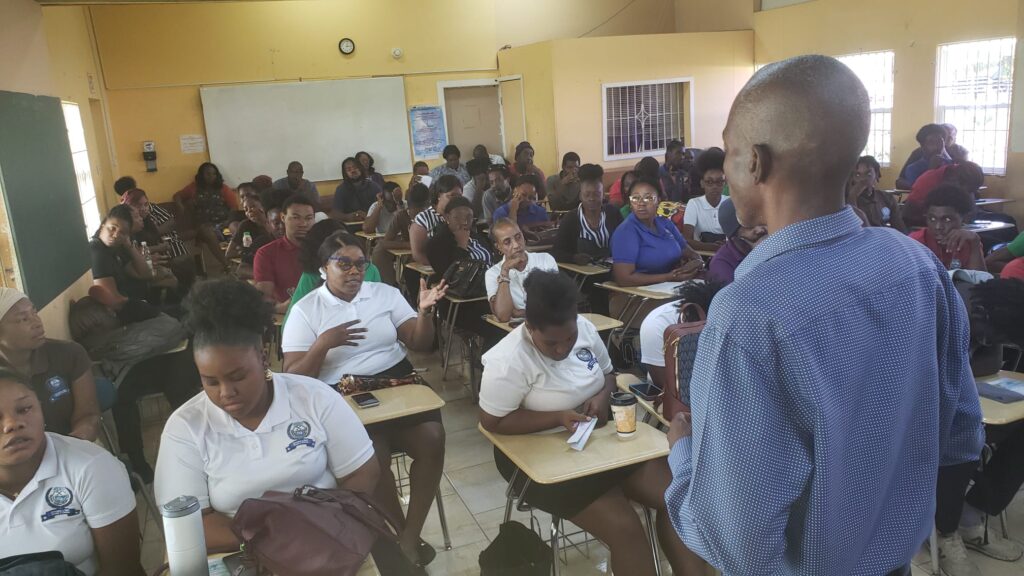
Director at AVEC Eston Williams informed that the age range of the second year trainees are 16 and over, noting that some of them are 40. Notably, the over fifty (50) trainees would receive a diploma following their two-year hands-on training.
“As a technical vocational institution, part of our training is to sensitize the trainees on work experience and work preparedness. So, the trainees that we have here today are second year trainees. They should be completing their training program at the end of June,” Williams stated.
He continued: “We would annually have what is called work preparedness, where the trainees will go out in the workforce and they would experience what it is to work out there using the skills that they would have gained within the institution itself, getting an opportunity to showcase their work, work habits, they would get the opportunity to build network, they would get the opportunity to even win over the employers out there for whom they would have been working for.”
Williams commented further: “Additionally, they get the opportunity to be a part of the workforce and they are able to know what it is like to be a part of the workforce. So they are able to earn an income and to prepare themselves fully for the work environment itself.”
The collective program areas for the trainees are: Commercial Food Preparation, Electrical and Electronics, Data Operation, Office Administration, AC and refrigeration, General Cosmetology, General Construction, Welding and Fabrication and Automotive Repairs.
“However, those are the mainstream courses that we have but from time to time, we will run short courses that will be maximum three months and those courses are run based on the needs. So for this set, the training and the certification, the trainees would receive a diploma at the end of their two years training,” the AVEC Director noted.
According to Williams: “Our intention is to have the Labour Department come in throughout the year at any given time to sensitise the trainees about their benefits, and the use of unions and their rights as labourers.”
Meanwhile, the union’s representative Francis, during his presentation spoke about the importance of being unionised, encouraged the trainees to join the 1940-founded organization (formerly called the Workers League- established in 1932).
He also touched on the essence of togetherness of workers at a workplace in addressing working conditions and other related areas by approaching management through a Collective Bargaining Agreement which generally requires 50 per cent plus 1 of the workforce at any company.
Francis outlined that workers becoming unionised members individually is quite beneficial as it relates to having representation in the workplace and overall in the labour market.
SKNT&LU First Vice President Curtis Francis, the union’s representative on the Technical Vocational Education and Training (TVET) Council seen while making remarks on the topic of ‘The Importance and Benefits of Unionised Bodies Within The Skilled Industry’ (Spokesman Snap)
He also pointed out that information about workers’ rights and protection are important for business owners to know and understand fully.
Francis highlighted the SKNTLU’s six (6) reasons why a worker needs a union, namely:
1. STRENGTH THROUGH UNITY-It is easier to gain concessions from management by collective bargaining through a Union than by arguing for your rights as a single person.
2.REPRESENTATION AT WORK-The Union provides representation for a worker in any dispute with management, and the worker is less at a disadvantage.
3. PROTECTION FROM EXPLOITATION-The role of the Union is to protect the workers from exploitation by management, with respect to wages, working hours, illness and injury, discrimination and victimisation and in any other area.
4. HEALTH AND SAFETY-The Union fights for a better working environment for the worker, e.g. improved sanitation, good ventilation, better catering facilities etc. The Union seeks to ensure that Occupational Health and Safety standards as laid down by the International Labour Organisation (ILO) are met at factories and other workplaces.
5. PERSONAL DEVELOPMENT-The Union provides opportunities for individual development of workers: (a) Through involvement in the organisational structure of the Union itself. (b)Through the provision of lectures, seminars and other educational courses for its members.
6. LEGAL SERVICES-The Union provides legal assistance to members involved in litigation related to work situations for either pro bono or at a much lower cost than would normally be obtained by the worker.
Other SKNT&LU representatives who attended the session were President Sydney Bridgewater, General Secretary Precious Mills and Field Officer Sean Kelly.
The three other topics covered by other presenters that day were: ‘Teamwork: Having The Right Attitude For Success In The Workplace’, ‘Finance And Investment: Building Wealth And Taking Care Of Your Health’ and ‘What Leadership Is Necessary For The Future.’
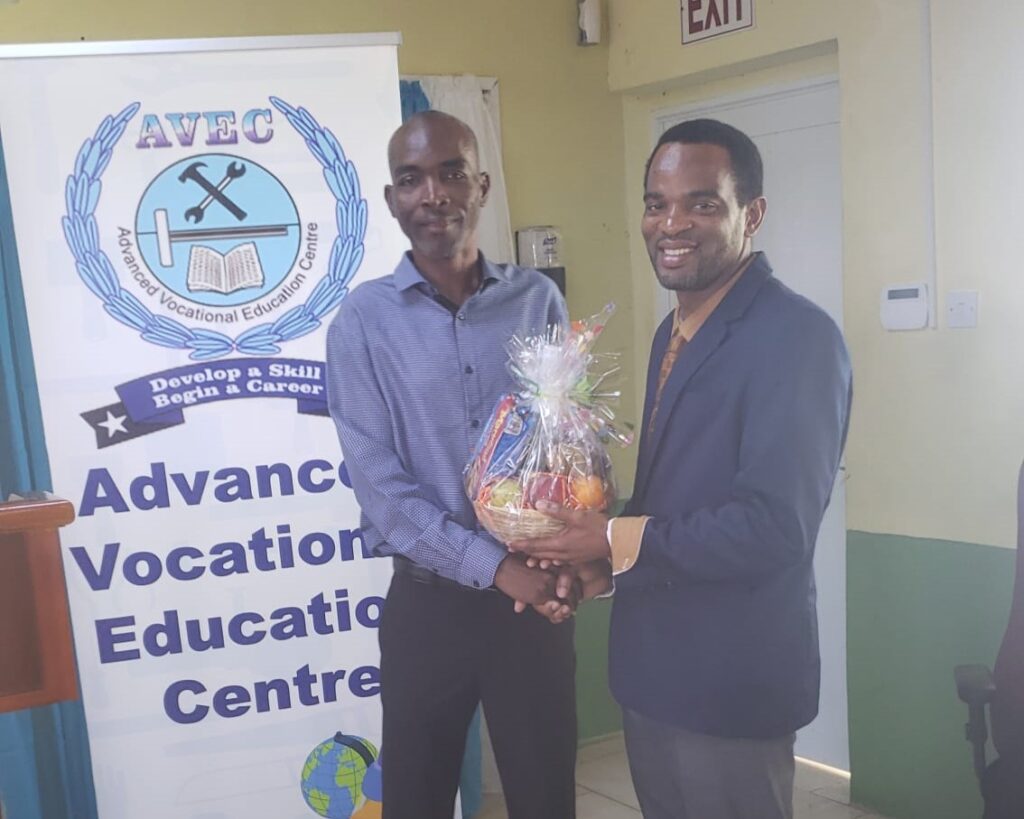
SKNT&LU First Vice President Curtis Francis, the union’s representative on the Technical Vocational Education and Training (TVET) Council interacts with trainees (Spokesman Snap)SKNT&LU First Vice President Curtis Francis, the union’s representative on the Technical Vocational Education and Training (TVET) Council (left) accepts a token of appreciation gift basket from Director at AVEC (Advanced Vocational Education Centre) Eston Williams following his presentation (Spokesman Snap)SKNT&LU First Vice President Curtis Francis, the union’s representative on the Technical Vocational Education and Training (TVET) Council seen while making remarks on the topic of ‘The Importance and Benefits of Unionised Bodies Within The Skilled Industry’ (Spokesman Snap)
Workers of St.Kitts and Nevis can become union members by payment of $10.00 registration (Entrance Fee) and $5.00 weekly subscription at an average of $20-$25 monthly.
Of note: The SKNT&LU functions as the Workers Representative on a number of national bodies and committees-namely- The National Tripartite Committee, Minimum Wage Advisory Committee, Social Security Board Solid Waste Management Board and the TVET Council.
BASSETERRE, St.Kitts (Wednesday 27th March 2024)-Coordinator of the upcoming 67th Basil Henderson Annual Easter Monday Aquatic Sports Meet Winston ‘Zack’ Nisbett says registration of all swimmers for this year’s event is a must.
He shared such information while speaking with this reporter on Wednesday 27th March 2024 in the lead up to the annual outdoorsy event, slated to take place on Monday 1st April 2023 at the Ferry Terminal in Basseterreunder the theme ‘Building Community Spirit Through Sports’.
“Registration of the names of all of the swimmers will be done this year so that there is proper order when it comes to smooth flow of proper record keeping which is very important especially when it comes to transparency for the distribution of prizes. I have the book already, a big book to take all of them. I’m going to show the names so they know who is who…,” he remarked.
Events are scheduled to start at 9:00 AM sharp. As usual, there will be swimming races, Ham Pole, Iron Pole, Boat Racing and a variety of other sporting and cultural activities.
Commenting on the significance of the event when it comes to keeping up the culture and togetherness as a community, Nisbett said “It’s a good sporting endeavor. It creates healthy exercising because to me it’s like an exercise.”
In encouraging persons to attend the event, Nisbett pointed to the boxing exhibition which is a well-anticipated feature which can facilitate challenging someone without using weapons.
“Boxing is a fun thing because you want to challenge somebody to get away from the guns and the knives. That is what boxing is all about.”
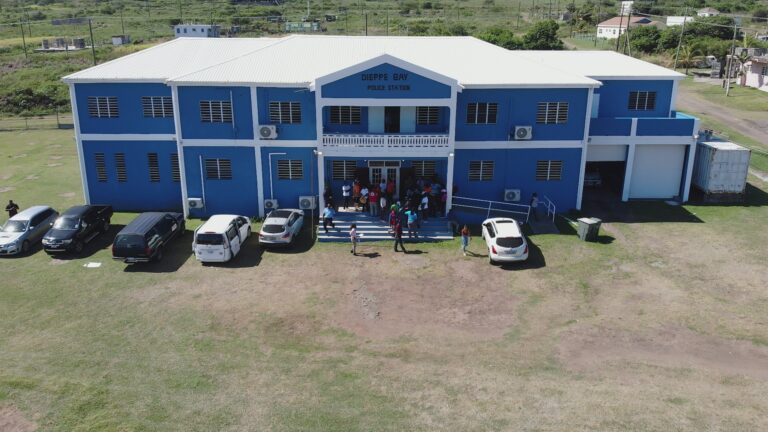
Basseterre, St. Kitts, 27 March, 2024 (NEMA): For the first time ever, the National Emergency Management Agency (NEMA) utilised unmanned aerial vehicles (UAV), also known as drones, to monitor and assess this year’s CARIBE WAVE Exercise.
CARIBE WAVE is a tsunami response exercise that takes place in the region annually on March 21. It can take several forms. This year, an evacuation drill was conducted in the Dieppe Bay to Saddlers area. The use of drones allowed officials to monitor the activity over a wider area and collect data that would help evaluators assess the performance of participants. CARIBE WAVE 24 Planning Coordinator, Oureika Lennon-Petty, spoke of the significance of having a bird’s-eye view of the exercise as it unfolded.
“We posted team members at two carefully selected locations and could see what was going on both in the village and at the assembly point with the drones. With several schools taking part in the exercise, we thought this would give us the advantage of being able to see if something went wrong and to get assistance where it needed to be quickly. It also allowed us to see if things were going as they should,” Mrs. Lennon-Petty disclosed.
Two drones were in operation on that day – a drone donated to NEMA by the humanitarian organization Global Support and Development (GSD) and one from the St. Kitts Electricity Company (SKELEC). They were operated by a member of the Geographic Information Systems (GIS) Department and SKELEC, respectively, with representatives from NEMA, the St. Kitts and Nevis Customs and Excise Department, the Royal St. Christopher and Nevis Police Force, Her Majesty’s Prison, the St. Kitts and Nevis Fire and Rescue Services, the St. Kitts and Nevis Defence Force and the St. Kitts and Nevis Red Cross Society providing support. All drone operators and supporting team members recently successfully completed a week-long Drone Operation Training workshop which was hosted by NEMA. GSD sponsored the workshop and provided the trainers. All participants received a certificate noting their Level I proficiency.
Mrs. Lennon-Petty added that NEMA’s drone was equipped with a speaker over which the emergency message was aired to the residents below and both drones used cameras to take photographs and video footage of the activity.
“The drone that was donated to NEMA is valued at about US $10,000 and has several features we can use including a spotlight, speaker and camera. So, we are deeply grateful to GSD for, not only assisting us with the donation, but also for supporting the Drone Training Workshop because we were able use the individuals from that workshop to operate the drones during the CARIBE WAVE exercise,” she added.
Disaster management agencies like NEMA can also utilise drone technology to efficiently and accurately conduct assessments both pre- and post-disasters in order to improve the response. Drones can quickly capture aerial imagery and data, and provide comprehensive and evidence-based damage reports, giving a clear overview of the most affected areas and inaccessible regions.