

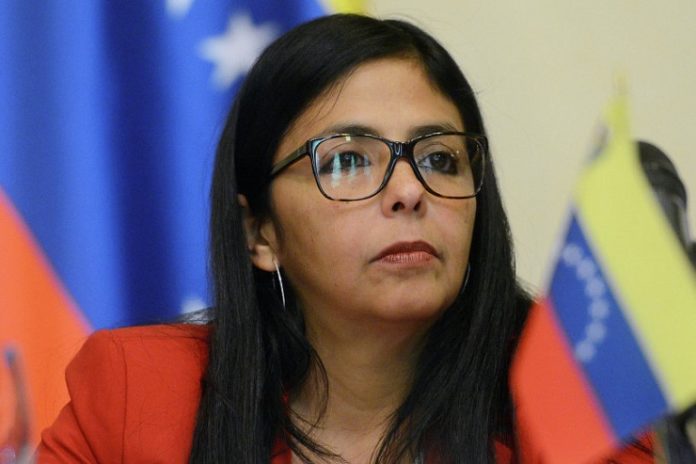
BRUSSELS, Belgium, Tuesday June 26, 2018 – The European Union (EU) Council yesterday imposed sanctions on 11 Venezuelan officials, including Vice-President Delcy Rodríguez, banning them from travelling to the EU and freezing their assets.
The decision comes on the heels of last month’s elections, which the opposition boycotted and which resulted in Nicolás Maduro being elected to a second six-year term in office. The EU says the elections “were neither free nor fair and their outcome lacked any credibility as the electoral process did not ensure the necessary guarantees for them to be inclusive and democratic”.
In a statement announcing the decision, the EU said the 11 sanctioned officials “are responsible for human rights violations and for undermining democracy and the rule of law in Venezuela”.
“This decision is a direct follow-up to the Council conclusions adopted on 28 May 2018, which called for additional targeted and reversible restrictive measures that do not harm the Venezuelan population in response to the recent presidential elections held in Venezuela,” it said.
But Venezuela has government condemned the move, describing it as “the continued aggression and meddling by the EU”.
The EU specifically accused Rodríguez, in her role as a member of the Presidential Commission and then as President of the Constituent Assembly, of undermining democracy and the rule of law in Venezuela, including usurping the powers of the National Assembly and using them to target the opposition and prevent them taking part in the political process.
In response to the sanctions, Rodríguez said the EU decision was driven by “racist” and “warmongering” policies of the “old imperial world.”
“The old imperial world or any foreign power will never bend my determination as a Venezuelan to love the land where I was born!” she tweeted in a “personal message” to the EU.
Rodríguez added that she would not be distracted by any threat, extortion, arbitrary measure or blackmail.
1. Mensaje personal a la UE ante sus medidas ilícitas: como venezolana comprometida con la defensa de mi Patria ratifico mi determinación a defender La Paz, la democracia, la independencia nacional y la autodeterminación, derechos q me asisten como ciudadana de este gran país. https://t.co/kb8lTOXMah
— Delcy Rodríguez (@DrodriguezVen) June 25, 2018
2. Ninguna amenaza, extorsión, medida arbitraria ni chantaje desviarán mi compromiso con la historia de libertad, dignidad y soberanía que nos legó Simón Bolívar! Jamás el mundo viejo imperial ni poder alguno doblegará mi determinación como venezolana a amar la tierra donde nací!
— Delcy Rodríguez (@DrodriguezVen) June 25, 2018
3. Aprovecho la oportunidad para autorizar a la Alta Representante @FedericaMog para disponer de supuestos bienes a mi nombre, que no existen, y los destine a la atención de la crisis migratoria que han generado con sus políticas belicistas, racistas y xenófobas!
— Delcy Rodríguez (@DrodriguezVen) June 25, 2018
The other 10 sanctioned were: Vice President of Economy and Minister for National Industry and Production, Tareck El-Aissami; Inspector General of the Bolivarian National Armed Forces, Sergio Rivero; General Commander of the Bolivarian Army, Jesús Suárez; Head of Directorate General of Military Counter-Intelligence, Iván Hernández; Vice President of the National Electoral Council, Sandra Ruzza; Commissioner General of the Bolivarian National Intelligence Service, Freddy Bernal; Deputy Attorney General, Katherine Nayarith Harrington; Member of the National Electoral Council, Socorro Hernández; and Secretary-General of the National Electoral Council, Xavier Moreno.

The EU Council’s decision brings to 18 the total number of individuals under sanctions in view of the situation in Venezuela.
The Council had listed seven Venezuelan officials involved in the non-respect of democratic principles or the rule of law as well as in the violation of human rights on January 22 this year. It said the restrictive measures aim to help foster democratic shared solutions that can bring political stability to the country and allow it to address the pressing needs of the population