By: Spokesman Newsroom
BASSETERRE, St.Kitts (Wednesday 9th April 2025)-“One of the ongoing challenges within society on a whole is overcoming the view that domestic work is ‘lesser’ work. That stigma affects wages, working conditions and how workers are treated. We must change that narrative-this is real, decent and valuable work. Domestic workers are workers too.”
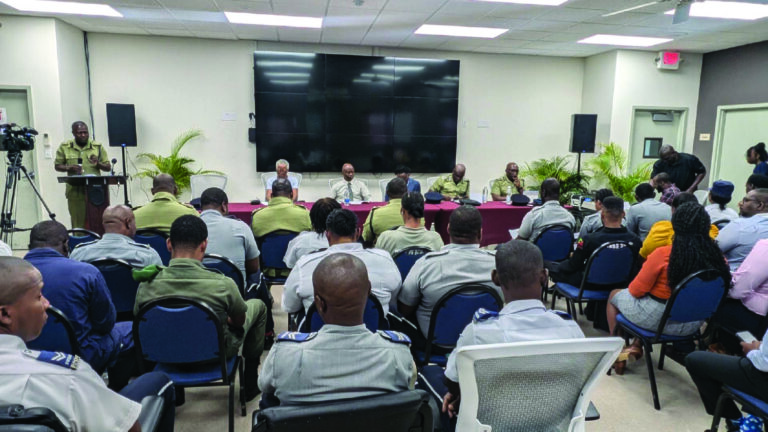
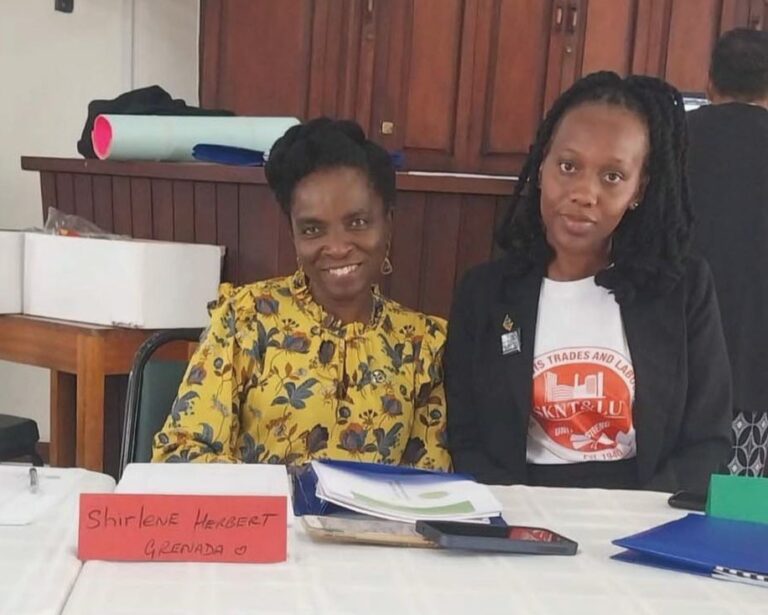
So said General Secretary of the St. Kitts-Nevis Trades and Labour Union (SKNT&LU), Precious Mills, on the heels of having recently participated in a WEIGO/IDWF Caribbean Sharing and Exchange Workshop, hosted from Friday 4th April to Sunday 6th April 2025, at the Bransville Hotel in Georgetown, Guyana.
The training workshop was conducted under the coordination of Caribbean Domestic Workers Network (CDWN) International Domestic Workers Federation (IDWF) Caribbean in putting a spotlight on the category of workers who are employed (whether full time or part-time) in private homes in positions such as caregivers and cleaners.
The main workshop facilitator was Pamhidzai Bamu-Chipunza of the Women in Informal Employment: Globalizing and Organizing (WEIGO), a Labour Law attorney (who originally hails from Zimbabwe in Africa but currently resides in the US), supported by Chairperson of the CDWN Shirley Pryce and IDWF Regional Coordinator (Caribbean) Angela Clarke.
Mills joined domestic workers, other union representatives and advocates from across the Caribbean to exchange insights, share experiences, and strengthen collective action toward improved protections for domestic workers.
“It was quite an educational and enlightening experience. It was really good to reconnect with some of my colleagues and meet some new ones. One of the most powerful moments for me was hearing directly from the domestic workers themselves.”
She added: “Spaces like these are powerful. They remind us that while our struggles may look different from country to country, the core issues are often the same-recognition, protection, and dignity for domestic workers.”
The workshop underscored ongoing efforts to push for the ratification and implementation of International Labour Organization (ILO) Convention C-189, which establishes decent work standards for domestic workers.
“The fight continues to empower domestic workers globally but as we zoom in on the region, we need collective action to push for the ratification, and where applicable for countries that have already ratified-the implementation of ILO C-189. The work does not stop at awareness-we need policy.That’s why pushing for the ratification of C-189 is not just symbolic, it’s necessary. But even in the lead up to ratification or even without such, there are minimum standards of the convention which countries can adopt in seeing to the betterment of domestic workers which is equally critically important.”
Mills emphasized that although some workers feel empowered to advocate for their rights, many remain hesitant.
“The reality is that while these workers do feel empowered in some regards, some are quite fearful about joining a union-which is their right. That fear is rooted in decades of undervaluing domestic work.”
“Domestic work is decent work. Unfortunately, this sector-so vital to the care economy-is often scorned, even by some employers. That’s a sad reality, because to be honest, these workers are key to society. Imagine a nanny or a cleaner helping to keep family households in check-running homes smoothly so others can focus on their own jobs.”
“One of our ongoing challenges is overcoming the perception that domestic work is ‘lesser’ work,” she added. “That stigma affects wages, working conditions, and how workers are treated. We must change that narrative-this is real, decent, and valuable work.”
Since introducing its Domestic Workers Section in October 2022, the SKNT&LU has been steadily mobilizing this segment of workers, including both nationals and migrants.
Mills noted that the union has been making efforts to organize domestic workers.
“We’ve made some strides in St. Kitts and Nevis, but there’s more to do. It’s not just about unionizing-it’s about creating safe spaces for workers to be seen, heard, and protected,” she commented.
The Union has also been engaging in discussions with the Ministry of Labour and Employment to advocate for strengthened protections and legal recognition.
“At this point, our union’s focus is pushing for the government to ratify and implement Convention C-189. We do have some legislative coverage-including the Domestic Workers Order 2005- but there needs to be more. When domestic workers are empowered, families thrive, communities are healthier and the economy becomes more inclusive. It’s time we recognize their contributions fully-on paper and in practice,” Mills stated.










Lent: A Discipline Worthy Of Living Daily
Each year, the Lenten season draws Christians across the globe into a period of reflection, repentance, fasting, and spiritual realignment. But as we observe this sacred season once more, an important question arises-Why is the kind of discipline exercised during Lent often left behind when the season ends?
Lent is more than a ceremonious routine or a religious tradition; it is an invitation into a lifestyle marked by self-control, humility, and deeper communion with God. The decision to give up social media, to fast from meat, or to carve out quiet time for prayer is not simply ritualistic-it is an act of intentional realignment, where our spiritual compass points away from the noise of the world and toward the presence of the Creator.
If we truly grasp the biblical call that we are ‘in the world, but not of the world,’ then our attitudes, habits, and lifestyle choices should reflect a higher calling-a divine connection to something greater than ourselves. Lent, therefore, becomes a mirror. It shows us not just who we are, but who we are meant to be.
Too often, though, we treat this season as a 40-day exercise rather than a doorway into deeper living. We may fast, refrain from indulgences, or commit to acts of charity, only to return to the distractions, excesses, and disconnections that once held us captive. But what if the discipline of Lent wasn’t an interruption, but the standard?
In a world that rewards instant gratification, Lent invites us to slow down. In a culture that praises self-promotion, Lent calls us to humility. And in an age of constant noise, Lent leads us to silence where the voice of God can be heard.
During this season, many choose to give up meat and eat fish instead, a reminder of simplicity and sacrifice. Others abandon their screens and socials, choosing instead to focus on stillness and Scripture. These practices, though deeply personal, are profoundly communal in their spiritual impact. Yet they are not meant to be broadcast or turned into performing acts. As Scripture reminds us, when we fast, we should not do so for show. The beauty of Lent lies in its quiet discipline-a surrender that isn’t loud but transformative.
We must challenge ourselves: why should the focus on God end with Easter? If we can discipline our hearts, minds, and souls during Lent, can we not continue this path of discipline beyond the season? The divine realm calls not only for seasonal observance but for a daily walk-a lifestyle anchored in intentionality and spiritual awareness.
In a world that constantly pulls our gaze downward, Lent teaches us to lift our eyes upward. Let that upward gaze remain, not just for 40 days, but for all our days.
Let Lent not be a pause, but a beginning.