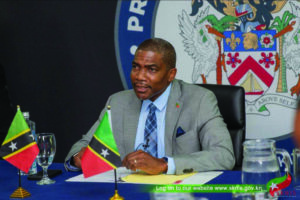
BASSETERRE, St. Kitts (Thursday 26th November 2026)-With about two stroke cases being recorded weekly at the Joseph N. France (JNF) General Hospital, Director of Health Projects and Strategic Initiatives at the Ministry of Health, Dr. Jenson Morton, has highlighted contributing health factors, the addition of specialist doctors and training of medical and nursing personnel to manage such medical emergencies.
Speaking during the Wednesday 25th November 2026 edition of ‘In Focus’, produced by the St. Kitts and Nevis Information Service (SKNIS) with interviewer Ian Richards, he disclosed that eighty-five ( 85) persons who presented at the JNF General Hospital up to the end of October this year were diagnosed with strokes.
The show’s topic for the week was ‘Understanding Strokes and the latest updates in Health Care.’
“In general, nationwide, we’ve been having an increase, a slow and steady increase in our overall rate of obesity and a slow and steady increase in our overall rate of non-communicable diseases, and that includes diabetes and hypertension. These two ailments in particular, along with heart disease, they’re precursors for increasing the likelihood of the general public getting a stroke,” he stated.
Dr. Morton also identified smoking, alcohol consumption and other drug use as contributing risk factors, while highlighting the importance of early diagnosis, taking prescribed medication, regular medical visits and healthy lifestyles.
According to him, approximately 17 stroke cases were recorded in May alone, which he described as abnormal compared with other months.
In explaining the two main types of strokes, Dr. Morton stated: “An ischemic stroke is a stroke secondary to a blood clot. Hemorrhagic stroke is a stroke secondary to a burst blood vessel.”
Regarding changes within the healthcare system, he highlighted the addition of an endocrinologist to assist with diabetes management and a neurologist to assist with stroke diagnosis, treatment and the establishment of medical protocols.
Dr. Morton also spoke about the addition of an interventional cardiologist and the associated need for advanced equipment and training of other healthcare personnel.
“So it’s not a service that can just be sprung up overnight by just one person,” he pointed out.
According to him, other changes include upgrades to ambulance services, emergency room triage, laboratory services, physiotherapy and diagnostic equipment, including a 128-slice CT scan machine.
Dr. Morton also highlighted the availability of clot-busting medication, tenecteplase, obtained through a joint purchasing effort involving the Organisation of Eastern Caribbean States (OECS), indicating that the medication is 93 per cent subsidised locally.
Asked about efforts to build the capacity of local doctors and nurses to manage cardiovascular emergencies, Dr. Morton identified the consultant neurologist, cardiologist, emergency medicine specialist, intensivist and anaesthesiologist as key members of the medical team.
“We’ve always had the pipeline open for specialization for both medical staff as well as nursing staff,” he stated.
According to Dr. Morton, a number of nurses have been identified for overseas specialist training, with some having returned following training in areas including intensive care and accident and emergency services.
He also disclosed that a member of the medical staff is currently undertaking research and gaining experience overseas in cardiology, while identifying the consultant intensivist, a resident of Newton Ground, as an example of investment in local medical personnel.
Dr. Morton indicated that opportunities for specialisation in Cuba remain available, while other territories are being explored to expand training options.
Regarding employment benefits during training, he highlighted study leave arrangements and support from the Ministry of Finance and Human Resources.
“And the nursing staff also when they go to get their specialty training they’re able to get, I think it’s full pay actually. I think they get full pay whilst they’re doing their specialization as the arrangement, just because of the tremendous amount of benefits that nurse specialization has to the system,” he stated.
According to Dr. Morton, such training courses last approximately 18 months.
He also highlighted the continuing medical education programme and weekly internal case reviews aimed at keeping healthcare personnel informed about medical research and patient presentations.
“All of the staff get the knowledge such that something like this doesn’t happen again,” he explained.
According to him, collaboration with Rutgers University in New Jersey, United States, also allows local medical personnel to benefit from weekly case presentations at no cost, alongside in-person training and reviews of hospital systems at least twice annually.