By Precious Mills
BASSETERRE, St. Kitts (Wednesday 19th April 2023)- “…if we understand fundamentally that the introduction of trade unionism in the Caribbean was a battle won on the streets and a battle where blood was shed; where workers put their lives down then we must protect that right to representation, [and that right] to recognition, religiously.” So said Senior Lecturer at the Labour Studies Department at the Cipriani College of Labour and Co-operative Studies (CCLCS) Atkins Vidal during a virtual session hosted by the college on the recognition procedure for trade unions in Trinidad and Tobagoheld on Tuesday 18th April 2023.
The St. Kitts-Nevis Trades and Labour Union (SKNT&LU) representatives President Syndey Bridgewater, General Secretary Precious Mills and Assistant General Secretary Gwenedene Pemberton attended the Zoom platform session which saw other representatives from various workers’ unions around the Caribbean region.
As understood from information shared by the Elma Francois Institute for Research & Debate CCLCS: “In a 2017 judgment, Justice Margaret Mohammed of the High Court, quashed the Recognition Certificate granted to the Banking, Insurance and General Workers Union (BIGWU) for approximately 2000 RCB workers. In 2018, the Court of Appeal (Trinidad & Tobago) dismissed an appeal by the Registration, Recognition and Certification Board (RRCB) and BIGWU to challenge this judgment.
It was further stated that: “The judgment of both the Court of Appeal & the High Court earlier must be considered extremely significant, if not a landmark one, as it challenges the wellestablished process by which the RRCB usually grants recognition in Trinidad and Tobago. The issue of recognition procedure is fundamental to the establishment and validity of trade unions and therefore this can potentially present an impediment to a worker’s right to join a trade union.” Vidal, in his presentation, pointing that the importance of understanding the history of recognition remarked: “There is no confusion among any of us here that trade union busting is a real thing, and every day the trade union is fighting to maintain the membership that it has and at the same time, there is a simultaneous battle to be gain recognition for new workers and and have an expanded base but if your expansion of your base, that process is [challenged] and you have a situation where workers are leaving faster than join then over a period of time without anyone doing anything to the movement, it would just disappear because you would just not be able to recruit members faster than your losing members and especially in Trinidad and Tobago we’ve had in the last 2 or 3 years, serious attacks on the movement in terms of retrenchment and layoffs which is a serious serious issue that the trade union movement I know has at the forefront of the work that they’re doing and that is why I think the turnout and registration process has been so good for this exercise because people understand how serious it is.” Vidal went on to give historical context of the subject matter saying: “One of the challenges is that you might not think that this recognition process is not so important.
For us in the Caribbean, our experience is very different from Europe, different from North America and even Latin America in terms of recognition of trade unions.” He added: “At the end of the period of enslavement throughout the British West Indies, there was a series of laws passed called the combination laws, and this is 1838 to 1840 which made trade unions illegal; which made any assembly of workers to organize and collaborate tier own interest; any kind of practice like that was illegal. It took one hundred years for that process, for that situation to be overturned.
So, with the exception of Jamaica and Guyana and even here in Trinidad and Tobago and a few other states in the 20th century, there was some leniency if you will but that Trade union legislation of the 20th century did not trade the modern day labour movement because it still included in it prohibitions to striking which is one of the most fundamental tools of the trade union movement. So, it was not until the actions of the trade union movement in the 1930s that you have a formal acceptance by the colonial authorities that the introduction of trade unionism was inevitable that they could no – LOCAL NEWS – 3 longer deny workers their rights to representation.” The Labour Studies lecturer went on to say: “And so if we understand fundamentally that the introduction of trade unionism in the Caribbean was a battle won on the streets and a battle where blood was shed; where workers put their lives down then we must protect that right to representation, [and the right ]to recognition, religiously.
And so, in instances like this when we”re being attacked… where the [ruling] puts the union at a disadvantage, [focus] in addressing that must be top priority for us.” According to him, that session is one of a few steps. As understood, coming out of that session the college is prepared to put together a paper which would show the “comparison across the region for the mechanism of trade union recognition which we would then circulate to all members because we find that while we think Trinidad and Tobago represents a worst case scenario, there could still be lessons for other comrades to learn in terms of recognition of trade unions in the region.” Vidal outlined that the second aspect would be an in-person session on the 4th of May, which other comrades are free to attend.
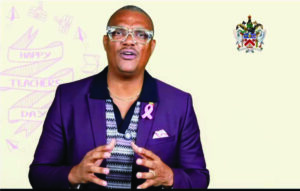
He stated also that part of the paper to be presented would include bullet points that comrades would have agreed to for the policy position to put to the government for changing the legislation on the issue of recognition. Front Page Image: Senior Lecturer at the Labour Studies Department at the Cipriani College of Labour and Co-operative Studies (CCLCS) Atkins Vidal seen while speaking a virtual session hosted by the college on the recognition procedure for trade unions in Trinidad and Tobagoheld on Tuesday 18th April 2023. (Spokesman Screenshot-Youtube. com/Elma Francois Institute)