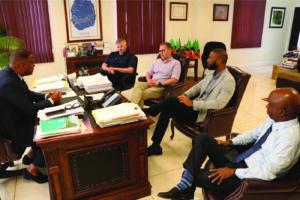
NIA CHARLESTOWN, NEVIS (June 02, 2026) — Nevis has achieved a landmark milestone in science, education and innovation with the successful launch of the first space life sciences experiment from the Caribbean region, positioning the Federation of St. Kitts and Nevis among a growing community of nations contributing to global space research. The experiment was launched on May 31, 2026, aboard the SSC SubOrbital Express SIX-5/M17 mission from Esrange Space Center in Kiruna, Sweden. The groundbreaking project was developed through a partnership involving the Ministry of Education in Nevis, the University of Zurich (UZH) and the Center for Space and Aviation Switzerland and Liechtenstein (CSA).
The experiment seeks to better understand how changes in gravity affect human immune cells, examining the impact of microgravity and hypergravity on gene expression and cellular function. The findings are expected to contribute to international research on human health during spaceflight and long-duration missions. Four science teachers from Nevis were selected to work alongside leading international scientists to design and implement the experiment, gaining hands-on experience in space research. Through the collaboration, teachers and students have been exposed to real-world scientific research, while new laboratory facilities and research capabilities have been established within the Federation. Officials noted that the mission demonstrates the power of strategic partnerships and highlights the potential of Nevisian educators and students to contribute to scientific innovation on the world stage. The successful launch places St. Kitts and Nevis on the map as an emerging participant in the global space economy, creating new opportunities for scientific collaboration, educational development, workforce training and technological innovation.