BASSETERRE, St. Kitts (Wednesday 18th November 2026)- “Some will ask, why not keep CBI and simply give up visa-free travel to Europe? Here is a plain answer. It would not stop at Europe.”
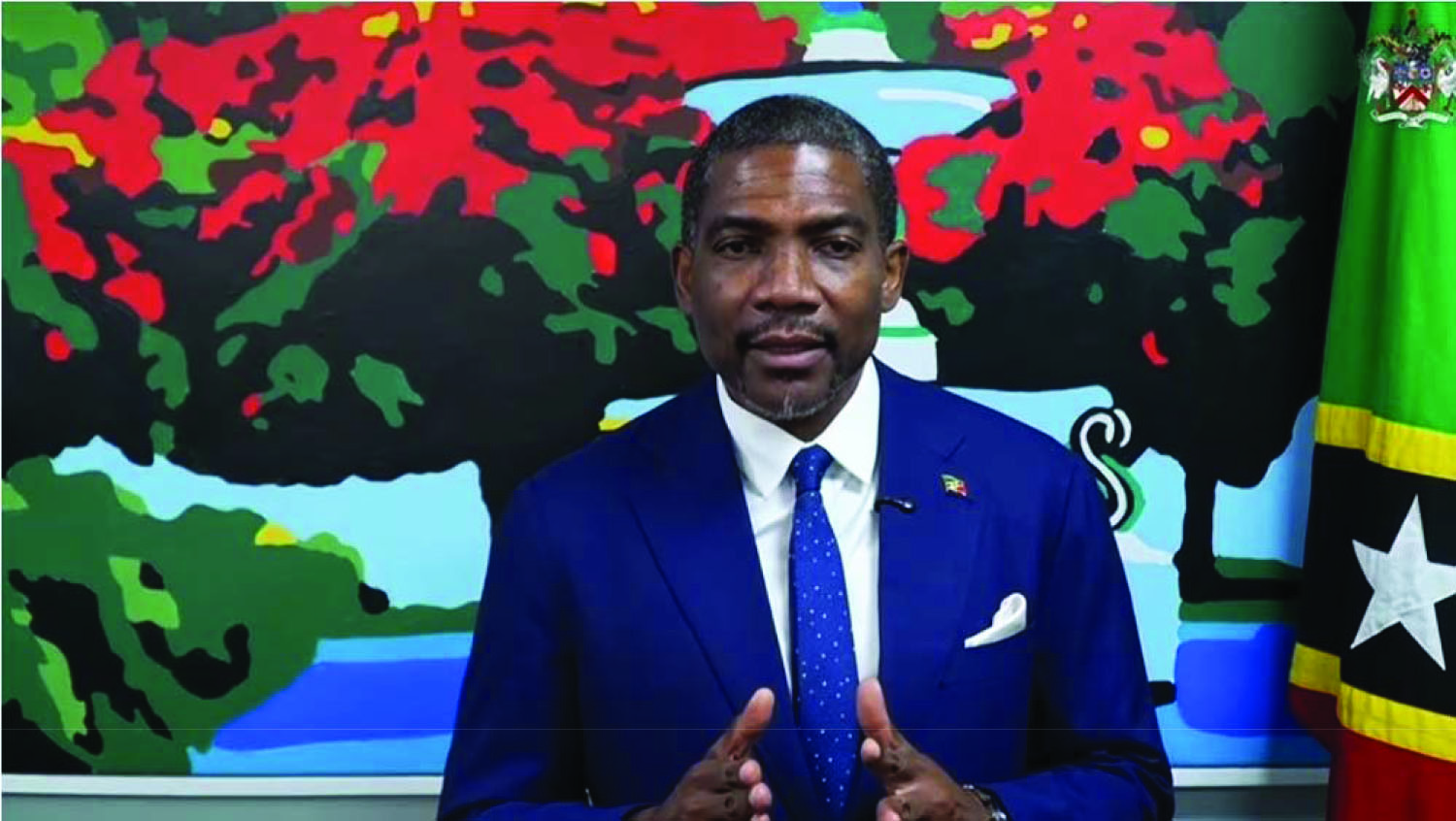
So said Prime Minister Dr. Terrance Drew, who also holds responsibility for Finance and National Security, during a national address on Friday, 13th November 2026, announcing the Government’s decision to wind down the Federation’s 42-year-old Citizenship by Investment (CBI) Programme.
As understood, the decision has been formally communicated to the European Union (EU), with a timeline for ending the Programme still being negotiated.
“So the only prudent decision is this. St. Kitts and Nevis will wind down its citizenship by investment programme responsibly on a timeline now being negotiated with the European Union,” Dr. Drew stated.
The Prime Minister cited changes in European legislation as a major factor behind the decision.
“In December 2025, a new European Union law came into force after it was voted through by the European Parliament. Under that law, simply running a citizenship by investment programme is now a reason the European Union can take away visa-free travel from a country.”
He continued: “In June of this year, the European Commission wrote to us. It invited St. Kitts and Nevis to wind down its CBI programme over a period of transition to keep our visa-free access to the Schengen region.”
Dr. Drew argued that continuing the Programme could threaten the Federation’s international banking relationships.
“If those banks cut us off, a visitor could not pay with a credit card. A family abroad could not send money home. A business could not pay for goods it imports.”
He added: “We would be cut off from the international financial system.”
Giving some background on the Programme, Dr. Drew explained how it began following the Federation’s independence.
“Our Citizenship by Investment Programme is 42 years old. It is the oldest program of its kind in the world. It began with our Independence Constitution of 1983 which allowed Parliament to decide who else may become a citizen. In 1984 Parliament passed the Citizenship Act.”
He continued: “Under that Act, a person who invested substantially in our country and who passed our checks could apply for the privilege of becoming a citizen.”
According to the Prime Minister, the Programme remained relatively small during its first 24 years, mainly attracting persons purchasing second homes or investing in government bonds, before demand increased following the global financial crisis of 2008.
“Between 2008 and 2025, CBI brought in approximately $6.5 billion EC to the federation,” he stated.
Dr. Drew also acknowledged the risks of depending heavily on one source of revenue.
“When one source pays for half or more of everything, you are at its mercy. If it stops, everything stops.”
The Prime Minister- Leader of the St.Kitts-Nevis Labour Party (SKNLP)-criticised the former Team Unity administration’s handling of the Programme, including its investment pricing decisions and prison project.
“The wind down of CBI began with the race to the bottom started by Team Unity in 2017 and the nail in the coffin was the Team Unity prison project,” he claimed.
On the Programme’s contribution to government revenue, Dr. Drew reported a decline between 2022 and 2026.
“In 2022 CBI money made up as much as 70% of our government’s revenue. In 2026 it is less than 20%.”
The Prime Minister identified geothermal energy, tourism, agriculture, digital services and the creative economy among the sectors targeted for economic diversification.
Addressing the future of Citizenship by Investment Unit employees, Dr. Drew indicated that they would be redeployed to support foreign direct investment efforts.
“The projects already on the way we will push for completion and the dedicated staff of our citizenship unit who worked so hard to restore our good name will be deployed to lead our new drive for foreign direct investment where their experience with investors will be put to work for our people,” he stated.
“In other words, they will continue to work.”
Dr. Drew also outlined plans for workforce training.
“Our government will train and further educate our people at every age and at every stage of their careers so that our workforce is more qualified, more skilled, and of course more productive than ever before.”
On taxation, he stated: “Raising taxes is not part of that plan.”
The Prime Minister assured persons who lawfully obtained citizenship through the Programme that their status would remain unchanged.
The Programme will continue operating during the transition period, with the final date for receiving applications to be announced following an agreement with the EU.
Referring to the Federation’s previous dependence on the sugar industry, Dr. Drew stated:
“We relied on sugar and the world changed. We relied on CBI and the world changed again. This time we saw the change coming and we prepared.”