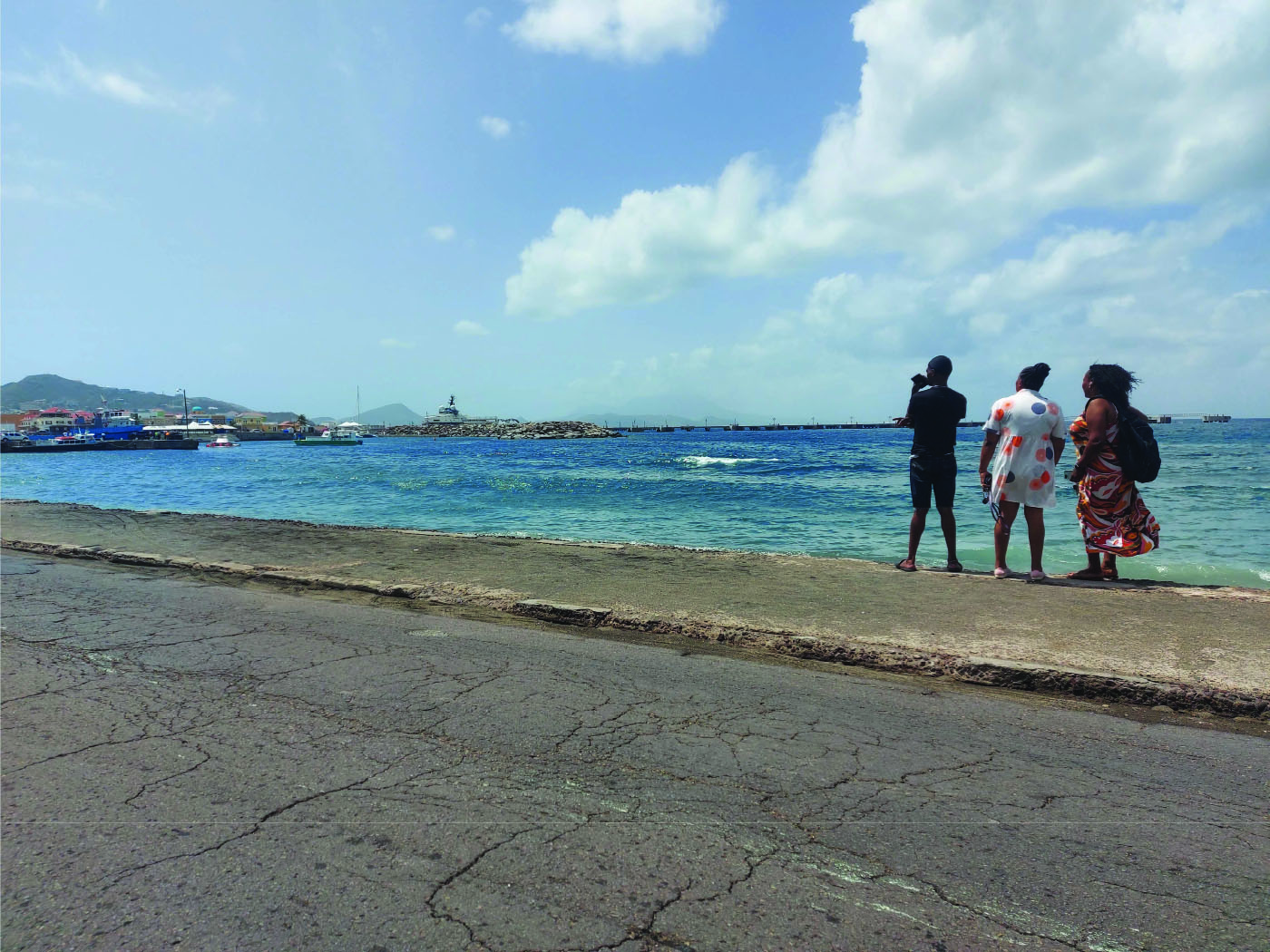
Where were you when you first heard the news that a passenger vessel was taking on water in the Basseterre Roadstead on Monday 29th June 2026? Were you at work? At home? Driving? At/Close the Ferry Terminal? Or perhaps scrolling through social media when the reports first emerged? Whatever the circumstances, one emotion was almost universal—fear.
Within moments, imaginations began to race. How many people were on board? Were there children? How far out was the boat? Had anyone been trapped? Could this become another maritime tragedy etched forever into our nation’s history?
Thankfully, it did not. Thanks to the swift, coordinated response of emergency agencies, first responders, ferry operators and ordinary citizens, all 47 persons aboard the MV Apple Syder—41 passengers and six crew members—were safely accounted for. Their professionalism and courage deserve the nation’s highest praise.
Yet while we breathe a collective sigh of relief, this close call should not simply fade into yesterday’s headlines.
Perhaps what made this incident even more unsettling was its timing, happening weeks before the anniversary period when our nation traditionally reflects on one of its darkest maritime tragedies—the sinking of the Christena in the Narrows between St. Kitts and Nevis. On 1st August 1970, more than 200 men, women and children lost their lives in a disaster that forever changed countless families and remains deeply embedded in our national memory.
For many, Monday’s incident reopened emotions that have never truly disappeared.
Many persons have also expressed relief that the vessel did not encounter difficulties farther out at sea or else the outcome could have been dramatically different.
That reality alone should humble us. This week also sparked another interesting public conversation. Some persons have determinedly remarked that the incident was the sign they needed to finally learn how to swim or resume swimming lessons. Behind the reactive take-away lies an important truth. Swimming is not merely a recreational skill—it is a life skill. While no one expects to find themselves in an emergency at sea, preparedness often begins long before an emergency occurs.
But individual preparation is only one part of the equation.
Incidents such as this must prompt continued investment in maritime safety, emergency preparedness, vessel inspections, crew training and passenger awareness. They must also reinforce the importance of regular emergency drills and ensuring that lifesaving equipment is always available, functional and readily accessible.
At the same time, we commend the authorities for launching a full investigation into the circumstances surrounding the incident. Investigations should never be viewed as exercises in assigning blame alone. Rather, they are opportunities to identify lessons, strengthen procedures and prevent future occurrences. Every recommendation emerging from such an investigation should be taken seriously and implemented where necessary.
We also commend the remarkable collaboration displayed by the Coast Guard, Fire and Rescue Services, Police, Maritime Affairs, NEMA, SCASPA, the Ministries involved, the crew of the Makana ferry, tug operators and every individual whose quick actions helped prevent what could have been a national catastrophe. Their coordinated response demonstrated the value of preparedness, training and teamwork under pressure.
Sometimes history whispers before it screams.
Monday’s incident should serve as one of those whispers.
As a nation, we have been spared what could have been another heartbreaking chapter in our maritime history. That blessing should never breed complacency but rather renewed vigilance.
May we never have to relive the horrors of the Christena. May every investigation lead to stronger safeguards. May every captain, crew member, regulator and passenger play their part in promoting safety.
And may this close call remind us that while tragedy was avoided this time, preparedness remains our greatest lifeline.