


By: Spokesman Newsroom
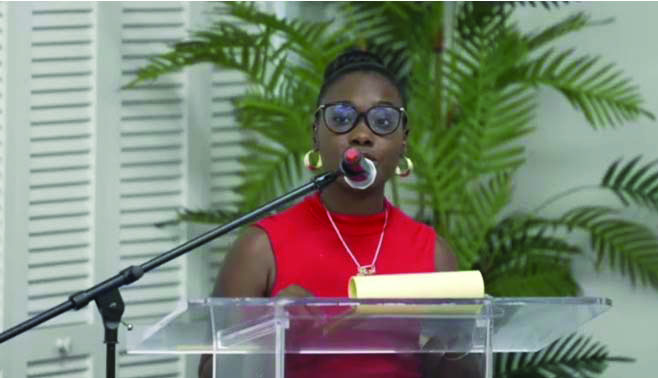
BASSETERRE, St. Kitts (Tuesday 3rd February 2026)-“Is this sound its own genre, or a sub-genre of soca? And who gets to decide that? We see similar debates happening across the region. Every genre we now recognise globally was once questioned, criticised and misunderstood.”
So said Director of the Department of Creative Economy, Roberitine Webbe, as she delivered remarks during Wilders Forum 2026 (Part One), held under the theme “Defining Our Sound: Charting the Way Forward” at the CUNA Conference Room on Monday 2nd February 2026.
The forum, hosted by the Department of Creative Economy, focused on the uptempo music unique to St. Kitts and Nevis that has been played and popularised for decades by local jam bands and unofficially referred to as Wilders.
As understood, such a two-day session has marked the beginning of a national dialogue aimed at defining, documenting, and positioning the sound within both cultural and economic frameworks.
In outlining the purpose of the forum, Webbe made it clear that the initiative was not about imposing decisions or erasing history.
“Today is not about announcing a decision. It is not about telling anyone what our sound should be called, and it is certainly not about erasing history,” she stated.
Rather, she explained, the forum was intended to confront conversations that have long been postponed. “Today is about starting a conversation we have avoided, neglected, or simply did not understand the true value of for far too long,” Webbe said.
She emphasized that the sound being discussed is neither theoretical nor newly created.

“Whether we like it or not, the sound we are talking about already exists. It has existed for decades, and traditionally it has been known by the very people who created it as Wilders,” she noted.
While acknowledging that debate around naming is inevitable, Webbe cautioned against dismissing history for the sake of convenience.
“We may debate the spelling. We may debate whether the name travels well internationally. We may even decide collectively that another name may better serve the future. But what we cannot do is pretend that the history does not exist simply because it makes us uncomfortable,” she said.
Webbe stressed that the discussion goes far beyond labels, saying: “This forum is not about a name in isolation. It is about identity, ownership, cultural memory, and how we choose to carry our sound forward without losing its soul,” she explained.
She challenged participants to reflect deeply on what defines the sound as distinctly Kittitian and Nevisian.
“What are the elements that make this sound unmistakably ours? Is it the rhythm? How we react when we dance – whether fast or slow, the bounce or the walk-up? These elements are undisputedly our own,” Webbe said.
She also touched on authenticity and commercial appeal.
“Are we naming our sound to appease international markets? And if so, what do we lose in the process? Does commercialisation require cultural dilution, or can authenticity be the very thing that gives us global distinction?” she asked.
Webbe emphasized that any decisions regarding the future of the sound must be collective and inclusive.
“These are not questions for one department, one generation, or one meeting,” she said, underscoring the importance of engaging artists, musicians, promoters, managers, cultural practitioners, intellectual property experts, and other stakeholders across the creative ecosystem.
She further explained that the forum represents the first step in a longer process. “This forum marks the beginning of a process to define, document, protect, brand, market, and advance the sound we have always known, while preparing it for a future we want,” Webbe stated. She added that discussions would inform the formation of a task force to guide the work “responsibly, transparently, and collaboratively beyond today.”
Meanwhile, Permanent Secretary in the Ministry of the Creative Economy, Delrine Taylor, described the Wilders Forum as a critical national dialogue initiative.
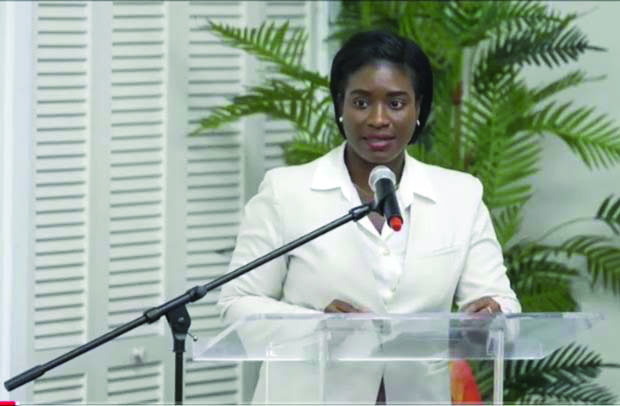
She explained that the initiative was designed to facilitate “an inclusive, structured national conversation aimed at gaining a clearer understanding of the indigenous sound- or sound of St. Kitts and Nevis- traditionally known as Wilders music.”
Taylor highlighted the importance of defining the sound in relation to branding, export potential, and intellectual property, noting that this approach ensures cultural preservation while creating economic opportunity.
“Simply put, this is part of our DNA. This is our culture. This is who we are,” she concluded.