Each year from June to November, here in St. Kitts and Nevis likewise other vulnerable countries know that this is the time period for the duration of the Atlantic Hurricane Season. But are we taking the warnings and advisory about the hurricane season seriously or have we become too complacent thinking that ‘St.
Kitts-Nevis is blessed’ and so ‘There is no need to worry because we have not gotten any major storm in years.’ Are we as a people generally in the habit of tracking storms and staying informed accordingly? What about a hurricane preparation plan as well as an evacuation plan…
How many of us have these safety measures as part of our lives? From credible recollection, Hurricane Gorge in 1998 was the last direct impact storm we experienced as a nation, and unfortunately some people use it as a ‘blessed gauge’ in their mindset when it comes to the hurricane season.
Though we have had some impact from major storms like Irma and Maria in 2017, it appears that some people have a relaxed notion about hurricane preparedness. Information gleaned from our local National Emergency Management Agency (NEMA) at www.nema.kn provides ‘Hurricane Preparedness Tips for Home’ as shared in full: BEFORE * Know your Emergency Shelters Contact the National Emergency Management Agency (NEMA) or your District Manager for the location of your closest shelters.
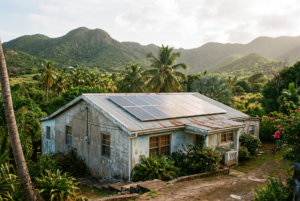
* Have emergency supplies on hand Flashlight and extra batteries Portable, battery-operated radio and extra batteries First aid kit Non-perishable (canned food) and water Non-electric can opener Essential medicines Cash and credit cards Sturdy shoes * Protect your windows Permanent shutters are the best protection. A lower-cost approach is to put up plywood panels.
Use 1/2 inch plywoodmarine plywood is best-cut to fit each window. Remember to mark which board fits which window. Pre-drill holes every 18 inches for screws. Do this long before the storm. * Trim back branches from trees Trim branches away from your home and cut all dead or weak branches on any trees on your property. * Check into your Home and Auto Insurance Confirm that policies are valid and coverage is appropriate. * Make arrangements for pets and livestock Pets are not allowed into emergency shelters for health and space reasons.
Contact the local Veterinary services for information on animal shelters. * Develop an Family emergency/ disaster plan Make sure that all family members know what to do in the event of impact. Teach family members how and when to turn off gas, electricity, and water.
Teach children how and when to call police or fire department and which radio station to tune to for emergency information. In case family members are separated from one another during an impact (a real possibility during the day when adults are at work and children are at school), have a plan for
getting back together. Hurricane Watches and Warnings A hurricane watch is issued when there is a threat of hurricane conditions within 24-36 hours. A hurricane warning is issued when hurricane conditions (winds of 74 miles per hour or greater, or dangerously high water and rough seas) are expected in 24 hours or less.
DURING AHURRICANE WATCH * Listen to the radio or television for hurricane progress reports. * Check emergency supplies. * Fuel car. * Bring in outdoor objects such as lawn furniture, toys, and garden tools and anchor objects that cannot be brought inside. * Secure buildings by closing and boarding up windows. * Remove outside antennas and satellite dishes. * Turn refrigerator and freezer to coldest settings. Open only when absolutely necessary and close quickly. * Store drinking water in clean jugs, bottles, and cooking utensils.
DURING AHURRICANE WARNING * If you need to evacuate your home, lock up home and go to the nearest shelter. * Take blankets and sleeping bags to shelter . * Listen constantly to a radio or television for official instructions. * Store valuables and personal papers in a waterproof container on the highest level of your home. * Stay inside, away from windows, skylights, and glass doors. * Keep a supply of flashlights and extra batteries handy. Avoid open flames, such as candles and kerosene lamps, as a source of light. * If power is lost, turn off major appliances to reduce power “surge” when electricity is restored.
As guided by NEMA, “hurricanes can be dangerous, listening to the hurricane warning messages as issued by St. Kitts Meteorological Services and NEMA can help you to reduce the chances of injury or major property damage.  Let us all remain or make plans for hurricane preparedness and by way of doing so avoid the type of ‘should have’ and ‘could have’ scenarios.
As the old saying goes ‘An ounce of prevention is better than cure.’