Home Blog Page 211

Saint Vincent and the Grenadines breaks a record, as smallest ever Security Council seat holder

Saturday, June 8, 2019 — NEW YORK — Following a secret ballot held on Friday, the UN General Assembly elected five countries to the Security Council, including Saint Vincent and the Grenadines, the smallest nation ever to secure a seat. Also elected were Estonia, Niger, Tunisia, Viet Nam.

The five States will take up their seats as non-permanent members of the Security Council in January 2020, replacing Cote d’Ivoire, Equatorial Guinea, Kuwait, Peru and Poland.

Every year, five countries are elected to the 15-member Council (10 of whom are non-permanent) for a two-year term, according to a geographical rotation set by the Assembly in 1963, to ensure fair regional representation: five from African and Asian and Pacific States; one from Eastern Europe; two from Latin American States; and two from Western European and Other States (WEOG).

Whilst Niger, Tunisia and Viet Nam were elected unopposed, two of the five seats were contested: El Salvador competed with Saint Vincent and the Grenadines to represent the Latin American and Caribbean group; and Romania lost out to Estonia in the East European group.

Speaking to the press outside the General Assembly Hall, Honourable Ralph Gonsalves, Prime Minister of Saint Vincent and the Grenadines, described the election of his multi-island nation of around 110,000 people, as a “historic occasion”.

Dr. Gonsalves added that the country is committed to the principle of sustainable development and, as a Small Island Developing State in danger of inundation by rising seas, is very concerned about the consequences of adverse climate change and intends to work very closely with the other members of the Security Council. The UN, he added, has limitations, but it also has “profound strengths.”

Following a 2014 General Assembly resolution, elections to the non-permanent Security Council seats were moved from October to June, to give incoming countries more time to prepare for their terms, before assuming their responsibilities.

Watch Honourable Gonsalves’s remarks to reporters below, following the Security Council vote at UN Headquarters in New York on June 7, 2019.

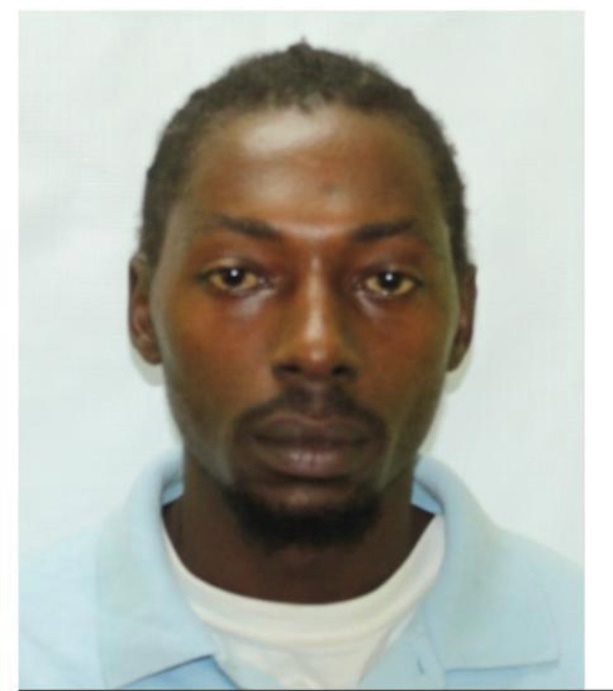
Jahvon Mills Wanted by the Police

0

A warrant, in the first instance, exists for the arrest of Jahvon Mills of St. Peters for the offence of escaping lawful custody.

Anyone who sees him or knows of his whereabouts is asked to contact the Basseterre Police Station 465-2241, or the nearest Police Station.

Botswana decriminalizes gay sex in landmark Africa case

JOHANNESBURG (AP) — Botswana became the latest country to decriminalize gay sex on Tuesday in a landmark case for Africa when the High Court rejected as unconstitutional sections of the penal code punishing same-sex relations with up to seven years in prison.

Jubilant activists in the packed courtroom cheered the unanimous decision in the southern African nation that is seen as one of the continent’s most stable and democratic. The ruling came less than a month after Kenya’s High Court had upheld similar sections of its own penal code in another closely watched case.

More than two dozen countries in sub-Saharan Africa have laws criminalizing gay sex, often holdovers from colonial times. Earlier this year, the southern African nation of Angola decriminalized same-sex activity and banned discrimination based on sexual orientation.

Those arguing against the laws say they leave people in the LGBT community vulnerable to discrimination and abuse while making it difficult to access basic health and other services.

The Botswana-based non-governmental group LEGABIBO, which supported the anonymous petitioner in the case, has said such laws “infringe on basic human dignity.”

People in the courtroom were ecstatic, leaping up, clapping and ululating, LEGABIBO legal policy director Caine Youngman told The Associated Press. When the judges said the right to privacy includes the right to choose a partner, “it hit home,” he said.

“I’m a gay man. I’ve been out for many years. Now I can live with my partner without worry,” Youngman said. He said the state might appeal “to appease the homophobes” and has 30 working days to do so.

The ruling led to rejoicing from rights groups that had expressed frustration with the Kenyan decision last month, including ones in countries such as Nigeria, Uganda and Ghana where gay sex remains illegal. Amnesty International called on other African nations to follow Botswana’s example in “an exciting new era of acceptance.”

Botswana’s High Court said in its ruling that penalizing people for who they are is disrespectful and discriminatory, and that the law should not deal with private acts between consenting adults.

Sexual orientation is innate and not a “fashion statement,” the judges said. “Any criminalization of love or finding fulfillment in love dilutes compassion and tolerance.”

The ruling cited the recent decriminalization in India and elsewhere. It also pointed out that all three arms of Botswana’s government have expressed the need to protect the rights of the gay community.

Before the ruling, LEGABIBO shared a comment attributed to President Mokgweetsi Masisi: “There are also many people of same-sex relationships in this country who have been violated and have also suffered in silence for fear of being discriminated. Just like other citizens, they deserve to have their rights protected.”

The judges cited the president’s comment in their ruling.

Botswana in recent years has taken other steps toward protecting LGBT rights. The High Court in 2017 ruled that the government should issue a transgender man documentation reflecting his identity. And in 2016 an appeals court ruled that LEGABIBO could register as a nonprofit.

“It is a day to celebrate pride, compassion and love,” UNAIDS executive director Gunilla Carlsson said in a statement after Tuesday’s ruling. Prohibitive legal environments increase the vulnerability of gay men, transgender women and others to HIV, the statement said.

Two killed as Haitians demand resignation of President Moise

PORT AU PRINCE, Haiti (CMC) — Police say at least two people were killed and several others injured as thousands of people took to the streets of the capital on Sunday demanding the resignation of President Jovenel Moise following the release of a report into the use of funds under the PetroCaribe initiative.

Police spokesman Michael-Ange Jeunes told reporters that the two people were shot while four others were wounded. He said a police officer was also injured during the protests and that 12 people have been arrested.

The police spokesman said that similar protests were held in the cities of Jacmel, Cap-Haitien, Saint-Marc and Gonaives.

France Sunday urged its nationals to stay away from the French Caribbean island of Haiti as thousands took to the streets demanding the resignation of President Jovenel Moise over allegations of embezzlement.

“Several associations and opposition parties have called for demonstrations this Sunday, June 9. If you have to arrive that day, it is advisable as far as possible to postpone your arrival,” the French government said in a statement.

The protests organised by opposition political parties, led to the burning of tyres, the erection of roadblocks and fire being set to at least two buildings near the departmental police headquarters. There were also reports of clashes between protesters and police near the presidential palace.

Police erected barricades near the presidential palace and fired tear gas to drive away demonstrators.

The protests follow the release of the 612 page reports of the Superior Court of Accounts and Administrative Litigation (CSC/CA) on the management of projects financed by PetroCaribe, an oil alliance of many Caribbean states with Venezuela to purchase oil on conditions of preferential payment.

In addition to the projects authorized by the 14 resolutions adopted by the Council of Ministers under six different governments, the Court had also examined investment projects and contracts related to the PetroCaribe fund, but not authorized by a resolution.

The audit found that significant shortcomings have been associated with the planning and implementation of development programmes and projects funded by the PetroCaribe Fund during the administration of former president Micel Martelly.

The Court made it clear that, overall, relevant documents were missing in most of the projects and contracts reviewed and as a result it was impossible to conduct a comprehensive audit of several projects.

For example, the 610 page report found that in 2014, for the same project to rehabilitate the Borgne – Petit Bourg de Borgne road section, the State signed two identical contracts worth more than 39 million Gourdes (One Gourde=US$0.01 cents) with two separate companies.

Moise, before he came to power in 2017, headed a company which received more than 33 million Gourdes to do the road work, though the company in principle did nothing but grow bananas.

The Bishops of the Episcopal Conference of Haiti (CEH) said that the findings as outlined in the reports “cast a crisp and overwhelming light on the disconcerting magnitude and gravity of the evil of corruption in its various political and operational mechanisms.

“Generalized corruption becomes endemic evil, a messy mud, a degrading fact, a robbery organized. It has become a real social plague that is plaguing our institutions …and thus seriously undermines, both from an ethical and an economic point of view, the development of our country.’

They said that the Haitian people expect that these two audit reports issued by the CSC/CA “will not be closed.

The Basseterre High School: What’s next?

0

By: Willa Franks Liburd

I had the opportunity to attend the town hall meeting held recently at the Tucker-Clarke Primary School to inform and update the public about the planned building of a new Basseterre High School in the Ponds area.  As many would know, the Basseterre High School (BHS) is currently housed in temporary facilities in the Taylors area near to the Washington Archibald High School since several years ago, when the old site at the Victoria Road/East Park Range area was closed on the basis of reported severe contamination.

The town hall meeting featured presentations from several local experts and regional consultants involved in the planning and preparations for the construction of the school.  They included three local experts who head or are consultants for the Public Works Department, the Water Department and the Development Control Planning Board.  There were three regional experts/consultants, one representing Stantec, the company that did the environmental impact assessment on the project, and two from Innotech, the contractors. 

Also present at the meeting was the Federation’s Prime Minister, the Honourable Dr. Timothy Harris, as well as several of his Cabinet colleagues, including the Minister of Public Infrastructure, the Honourable Ian “Patches” Liburd.  The meeting was chaired by the Permanent Secretary in Education, Mr. Vincent Hodge.  There was a good cross section of members of the general public present, several of whom later asked very pertinent questions and voiced their concerns especially over the building of the school over a major aquifer.

I was particularly interested in the meeting not only because I was a past student and former teacher of the Basseterre High School and have been following its travails over several years, but also as an economic development planner, I once served  as office-in-charge of the Planning Unit during the administration of Dr. Kennedy Simmonds during which time, together with the then Water Engineer and Manager of the Water Department, Mr. Athill Rawlins, we developed and oversaw the preparation of a multi-million US dollar water development project which was funded by the  Kuwaiti Arab Development Fund,  the first such project in the Eastern Caribbean to be approved by the Fund, as we were told.

In my view, all the presentations were excellent and gave a good overview of the preparatory and planning process involved in the decision to build the school at its designated site. I was particularly struck by the presentation by the consultant from Stantec who gave in very elaborate detail the possible environmental effects of building the school at the designated site at Ponds over a major aquifer and outlined the measures, including the construction of infrastructural systems such as a pond, water towers and sewage system, to mitigate any possible negative impacts on the aquifer and the immediate environs.  

Cost  

The audience was informed by the representative from the Public Works Department that the initial cost of building the school was estimated at $40 million, but was now estimated at $80 million, and that this was an open estimate which could go higher or lower.  It is reasonable to expect, I believe, for it to go higher rather than lower and it may be reasonable to expect the final plans to cost closer to $100 million.  The Innotech contractors  spoke of about 400 jobs to be generated during the construction phase, of which some workers are expected to be brought in from abroad to supplement what is available locally.

My interest was piqued when it seemed that for a $40 million school building on the designated site, another $60 million would need to be spent in constructing the necessary infrastructure to prevent damage to the environs in the form of aquifer contamination and flooding of the Ponds Pasture/New Town area from rain runoff from the school, the latter which the EIA consultant felt was the greater risk.

The audience had been informed earlier that five possible sites had been identified on which to build the new school, including the selected site, one near the RLB International Airport, and the old Basseterre High School site.  Three, including the BHS site, were eliminated based on certain criteria, which left the selected site and the one near the airport as the two front runners.  The latter was eliminated due to the gradient of the land, its designation as an industrial park which already had occupants, and in particular because it was in the flight path.  In regard to distance, it was also not considered ideal for most students in the Basseterre area.

Having heard the various presentations, it begged the question as to whether if a cost-benefit analysis were done for other possible sites, including the existing old site of the Basseterre High School, if it would still have warranted the expenditure of an extra $60 million to prevent possible contamination and negative environmental impact on the selected site over any other possible site.  

That is to say, whether, with the level of expertise and advanced technology currently available at the local, regional and international levels, greater consideration could not have been given to identifying any further lingering contamination of the old Basseterre High School site, cleaning it up, demolishing the old structures and having the new school constructed there on ideally a prime location for such a school.  

Sometimes we can be lopsided in our vision.  It should be said here that the old Basseterre High School site has become an environmental hazard and eyesore in the area due to the ongoing total neglect of the premises.  Would that some attention could be given to creating a few local jobs to keep the place clean and secure, until a decision is made on what to do with this prime site.

Social equity

There is another consideration that has not been given much attention and that is the aspect of social equity.  Over the years, various administrations have endeavoured to level the playing field in education and offer greater accessibility for all to high levels of education at the primary, secondary and tertiary levels.  At the primary and in particular at the secondary level, various administrations have sought to do so by building secondary schools throughout the island of St. Kitts to enable the children of residents in those areas to not only have easy access logistically to a secondary school but to enhance the level of education offered at that school, including through a fair distribution of qualified teachers.

The $100 million new Basseterre High School ($40 million of school building and $60 million of mitigating infrastructure), with the many features that have been outlined, will undoubtedly become a major attraction for all – for students, for their parents and for teachers.  It is expected to house up to 1,000 students and over 100 teachers.  Who will these students and teachers be at any given time?  How will they be selected?  But also importantly, how will this impact other schools on St. Kitts in regard to their own level of esteem and the relative quality of teaching and educational facilities provided at those schools viz a viz the new Basseterre High School.

No mention has been made to my knowledge of external financing, and the assumption is that the financing will be sourced locally.  The local treasury will be paying for the construction from public funds and over time the general population will be paying through their taxes for the heavy maintenance cost that this would undoubtedly call for.  So it begs the question:  Given existing expertise and advanced technologies, would it not be more rational from a social and economic standpoint to build a $30 to $40 million new Basseterre High School at the old BHS school site once it has been well decontaminated, and use another $60 to $80 million dollars to upgrade all of the high schools around the island, where necessary?

Finally, I would say that the recent town hall meeting on the subject was well needed.  I believe that it has given the general public a good birds eye view of what is at stake.  If nothing else, it would underscore the importance of the continual maintenance of public buildings by the authorities, and also by those who use the school.  It underscored again the importance of good potable water for life and for living and the need to preserve our water resources.  I believe the new school, wherever built, will carry on the tradition of the past of high quality education in St. Kitts and Nevis, but I hope that this would not be limited or restricted to one area, but be a model for other schools throughout the Federation.

Wrensford Addresses ID Printing Machine Options

By: Spokesman Newsroom 

BASSETERRE, St.Kitts (Friday 7th June 2019) – Former Deputy Director of the St. Kitts-Nevis Social Security Board Steve Wrensford, the Opposition St.Kitts-Nevis Labour Party (SKNLP) candidate for Constituency Four says there are options to print the National Identification cards issued by the Electoral Office and finds it is “unacceptable” that individuals have been waiting for about six months to date to collect their cards because the machine at that office is down.

“…the head of the Electoral Office- the Supervisor of Election [Elvin Bailey]-works at a place that can do the cards for persons who are in receipt of cards. In other words, Social Security has done for the government on more than one occasion projects by issuing cards for persons in different government departments. We also have the Inland Revenue Department who have a similar machine.”

Wrensford, at the time, was speaking at the SKNLP monthly press conference held on Wednesday 5th June at Galaxy located at Port Zante in Basseterre.

He added: “I do not see why the Supervisor of Election cannot systematically organise a particular day in which those cards can be printed and persons can receive the cards. They can do it on a weekend, they can do it on specific days after hours at the social security office or even the Inland Revenue Department so the excuse that we are hearing is not acceptable. It’s a deliberate attempt to frustrate the ranks of the Labour movement, deliberate but ewe are not going to be frustrated. We are going to take this matter to court. In the long haul. All of us know, just must prevail and we’re going to take it to court.”

When contacted by this media house on this matter, Bailey-the Acting Director and Board Secretary at Social Security- declined to give a comment.

A public poster at Electoral Office signed by him informs in part that: “A notice will be made via the media when the machine is back to full function.”

Concerning the Electoral Office issues directly related to his constituency, the SKNLP candidate Wrensford talked about the over 180 names taken off the voters list.

According to him: “These names have been taken off without the persons being given due process. They have not been notified. They have not been given the right to appeal the objections. Based on the law, a person has the right to appeal by receiving notice that their names have been taken off and they have seven days in which to appeal that. These voters from Number Four have not received any notice that their names have been objected to, any notice that their names have been removed from the voters list and by extension, they have not been given the right due process to appeal the removal of their names. That I say is treasonous and it is disrespectful to the citizens who are born here, are from here and live here.”

“I can go further [to say] that persons who are legitimately registered and they go to the Electoral Office, to renew their cards, they are given excuses; unacceptable excuses that the machine is down. They have been hearing this for more than six months, and this-as I said before- is unacceptable,” he added.

Answers Still Needed: Tau Johnson Report Gets Bashed

By: Spokesman Newsroom

BASSETERRE, St.Kitts (Friday 7th June 2019)– A police report released this week relating to the investigation of the July 2018 controversial fatal traffic accident involving 20-year-old Tau ‘TJ’ Johnson does not sit well with critics who are still demanding answers. 

In an exclusive interview with this media house, one of the individuals who participated in a ‘Justice For TJ’ protest last year said “the report does not add anything because answers are still needed almost year later.”

According to him/her: “To me it’s like a smokescreen… a cover up. It is very vague. I hope that at least if they gave a report to his parents it was something different.”

Commenting on calls by some individuals that the CCTV footage should be released publicly, he/she commented:  “Yes, to show transparency and to clear name fully since this is the case. I agree.”

An autopsy report revealed that the “accident victim” died as a result of acute internal blood loss due to a ruptured aorta sustained in the vehicular accident.

The autopsy was performed by Forensic Pathologist Dr. Valery Alexandrov.

Johnson, on the occasion of his 20th birthday, was involved in what police said was “a fatal accident” on Saturday 7th July along Wellington Road after he tumbled from a motorcycle in what police described as a police chase.

Some eleven days after (Wednesday 18 July 2018), a silent group of protestors took to the streets which saw a  featured scores of young people, mostly teenagers and persons in their 20s.

The protest kicked off at Greenlands along Cayon Street then turned on to Church Street whereby participants stood outside Government Headquarters for about a minute or less.

Next, the procession moved onto Liverpool Rowe then Fort Street then onto Cayon Street where demonstrators stood outside the Basseterre Police Headquarters for more than fifteen (15) minutes.

Individuals who took part held the position that an injustice was done, accusing the authorities of a cover up and thus demanding answers.

SEE FULL POLICE PRESS RELEASE BELOW:


June 04, 2019

      FOR IMMEDIATE RELEASE

STATEMENT ON THE INVESTIGATION SURROUNDING THE DEATH OF TAU JOHNSON

It has been brought to the attention of the High Command that the information regarding the investigation into the death of 20-year-old Tau Johnson was not made available to the public. Johnson was involved in a fatal accident on July 07, 2018 along Wellington Road.

In an official report received from the Director of Public Prosecution (DPP) in late January 2019, it was stated that based on the evidence provided from the independent investigation and the CCTV footage, the vehicle driven by the police officer was not driven in a manner which posed a danger to the deceased or members of the public. The police was in pursuit of the deceased who failed to comply with a siren request to stop.

The report also confirmed that, “an independent vehicle examiner found no evidence that the vehicle made contact with the motorbike driven by the deceased.”

It concluded that, “on the evidence available, there is nothing to suggest any careless, reckless, or dangerous driving on the part of the police officer. It is not recommended that any criminal sanctions be brought against the officer involved.”

The High Command apologises for the delay in releasing this information. Upon receiving the report from the Director, there were certain legal stipulations which restricted the subsequent release of the same. The Royal St. Christopher and Nevis Police Force continues to abide by its mission statement to uphold the law fairly and firmly, without fear or favour, to prevent crime, to pursue and bring to justice those who break the law, to keep the peace, to protect, help and reassure residents and visitors and to be seen to do all this with integrity and impartiality.

Marijuana farmers in St. Vincent reject US$50 per pound from company

0

KINGSTOWN, St. Vincent, Mar 4, CMC – The President of the Cannabis Revival Committee (CRC), Junior “Spirit” Cottle, is urging marijuana farmers not to accept anything less than EC$300 (One EC dollar=US$0.37 cents) for a pound of their product after a locally-based medicinal cannabis company said it was offering US$50 per pound.

“We are not saying we are not going higher. But we are not going below that. And, under the medical industry, we’re looking for more than that. We will be negotiating but, as it stands now, under the amnesty, it mustn’t go below that,” Cottle told the Caribbean Media Corporation (CMC).

In a statement last week, the CRC called on traditional cultivators of cannabis “to be on the lookout for some foreign investors who want to offer them lower than the unofficial EC$300 minimum which they have been receiving for one pound of cannabis”.

The CRC it had received information that some investors have been “attempting to put traditional cultivators against one another by recruiting some Vincentian nationals to act as agents in getting them to arrive at this agreement”.

Cottle said that in some cases, as low as US$50 is being offered to growers.

The local medicinal cannabis company, Vincy Leaf, is offering US$50 per pound for the marijuana it buys and according to Ronald “Ronnie” Marks, a director of the company, the price was informed by how much his company can sell its product in Canada, its intended market.

“It’s oils. It’s not buds, it’s not recreational marijuana,” Marks told CMC, adding that his company has to factor in the cost of processing and securing the cannabis extracts.

He said he fully supports Cottle quest to get the best prices for farmers, but said that the activist must be realistic.

Cottle said that a modern cannabis industry demands high standards and compliance from all licensees. “This in itself requires a greater level of investment expenditure on the part of our growers, which means less profits in their pockets,” he said, adding “traditional growers cannot accept such situation

“After suffering extreme hardship from the eradication of our crops and imprisonment by the state, after being robbed by unscrupulous middle men who credit our crops never to return, and by armed pirates, sometimes losing our loved ones in the process, we call on all farmers to resist such attempts,” Cottle said, urging the traditional farmers to rally around the CRC to negotiate “the best possible deal”.

Cottle told CMC that traditional growers of marijuana do not normally accept less than EC$300 for a pound of marijuana, noting “there are cases you may hear a man might tell you give him EC$400 a pound”.

He said the basic price of EC$300 a pound has been standard for 20 to 30 years and that “certain investors” have been offering US$50 per pound for marijuana during the amnesty period.

A marijuana amnesty law passed last year will waive criminal penalties for framers who can sell illegally grown marijuana to the medical marijuana industry within a specified one-year period.

Cottle said that during the amnesty period, farmers will not have to abide by the stiff standards that are required by the medical marijuana.

“It is not the same thing, it’s true, but $300 a pound is what is there now. That doesn’t require the rigid standards and compliances that are required under a medical cannabis industry.

“After the amnesty period, the requirements will be more rigid, so naturally, the investment into that industry will be greater, so we will be looking for more returns. But that is left also to be negotiated. And that will be based on the kinds of taxes and the kind of profit investors making. And I think we will have access to that because, guided by the regulations, we will be able to get all that information,” Cottle said.

But Marks said that there seems to be “a fundamental misunderstanding as to the illegal market and the medicinal market” for marijuana.

“I am in full support of Spirit to get the best price for the farmers. There must be the best price for the famers. But realistically, you are not going to get the same price for medical marijuana as you get for recreational marijuana.”

“I have been involved for 20 years of defending persons who planted marijuana, but it was illegal at that point,” said Marks, an attorney.

“Here’s scenario: say if I can plant and you are telling me I can produce 1,000 pounds per acre and I am selling you at US$50 per pound. That’s me making US$50,000 every three months. Which farmer going to reduce that?”

Marks said that Cottle proposal will price traditional growers out of the market.

“Spirit is on the right road, get the best price for the farmers but that price is not sustainable for medicinal marijuana. For recreational marijuana, it’s chicken feed… Persons with large tranches of land, contiguous acres of land will be taking advantage of that,” he told CMC.

Last December, St Vincent and the Grenadines became the first Organisation of Eastern Caribbean States (OECS) member to pass legislation allowing for the decriminalisation of marijuana for medicinal and scientific purposes.

Parliament approved two pieces of legislation that also allows for the production of the crop under a tightly controlled framework.

Agriculture Minister Saboto Caesar, who piloted the measure, said that it would end many of the sufferings people had endured in the illegal marijuana trade.


OECS Commission to start using Facebook’s Disaster Maps ahead of the 2019 hurricane season

Wednesday, June 5, 2019 — The OECS Commission signed an agreement with Facebook Caribbean today that will allow access to Facebook’s Disaster Maps, in an effort to improve emergency response for OECS Member States ahead of the 2019 hurricane season.

Facebook’s Disaster Maps are dynamic mapping resources with information about where populations are located, how they are moving, and where they are ‘checking in safe’ during a natural disaster. Using this de-identified and aggregated information, relief agencies will be able to more effectively respond to the needs of affected communities with appropriate services and supplies.

At a signing ceremony held in honour of the partnership, Claudia Giraldo, Facebook’s Public Policy Manager for the Caribbean, stated

“In moments of crisis, people come to Facebook to connect with friends and loved ones. The anonymized information about their location can help relief organisations concentrate their efforts where they are most needed.”

“Supporting communities to recover and rebuild after a disaster is core to our mission. We are aware of the challenges that many Caribbean nations face during disasters and we are very pleased to be able to support the OECS Commission with our Disaster Maps. We hope this is the first step towards broadened collaboration.”

Dr. Didacus Jules, Director General of the OECS Commission, stated

“As we continue to strengthen our resilience to the effects of climate change and natural disasters, we are cognizant of the advantages of a predictive approach. Access to Facebook’s Disaster Maps will allow us to monitor the almost real-time movement of persons and therefore be better positioned to deploy assistance.”

“We look forward to continued partnership with Facebook on this extremely important initiative.”

For more information about how Disaster Maps work, visit:https://dataforgood.fb.com/tools/disaster-maps/

CIBC FirstCaribbean toasts its staff on employee appreciation day

0

Basseterre, St.Kitts, June 6, 2019 – Smiles lit up many faces and laughter echoed across the banking halls and offices of regional bank CIBC FirstCaribbean as management toasted its over 3000 employees.

From mouth-watering breakfast spreads and tasty lunches served by executives turned ‘chefs’ for the day to a myriad other fun-filled activities, the bank said a rousing “thank you” to staff as part of Employee Appreciation Day celebrations on Tuesday, May 28.

Executives, managers and team leaders also treated their teams to a number of educational and fun activities as well as giveaways and goodies throughout the day.

In a message to staff at the start of the day, the bank’s Chief Executive Officer Colette Delaney thanked employees for their “great ideas, amazing dedication, loyalty and support that have been truly impressive and thoroughly appreciated”. She noted it was their dedication and commitment that have taken CIBC FirstCaribbean to “a remarkable position” in the region.

“As we celebrate together we, your leaders, recognize that we are only as good as the teams around us. Your personal commitment to excellence inspires us every single day. We will continue to foster an environment of mutual respect and to create opportunities for growth that make your professional journey a source of pride and satisfaction,” Ms. Delaney said.

Staff in the Bahamas took a musical journey from the 1950s through to the 90s displaying the various dress styles that accompanied the particular music genres. Their colleagues in Barbados engaged in a number of activities including a vintage train ride through the countryside while others took in a special showing of the movie Avengers Endgame at one of the island’s cinemas at Limegrove in Holetown on the west coast.

The Jamaican team used the day to celebrate diversity. Using the country’s motto “Out of many one people”, they dressed to reflect the various ethnic groups in the country such as Africans, Chinese, Indians, Europeans and Syrians.

The Bel Jou Hotel was the venue for St. Lucia’s celebration which featured a rooftop sunset cocktail event with karaoke and board games. A tour of the Geothermal Project at Bamboo Range followed by a ‘goat cook’ and lime at Black Point Historic and Recreation Park was the staff in St Vincent celebrated their Employee Appreciation Day.

In St. Kitts and Nevis a half day was earmarked to accommodate the celebrations which kicked off with an exchange of gifts and tokens between management and staff. The day culminated with a scrumptious breakfast buffet in Basseterre and gourmet lunch in Charlestown. The gift giving and tokens of appreciation continued to flow throughout the day.