


By: Precious Mills
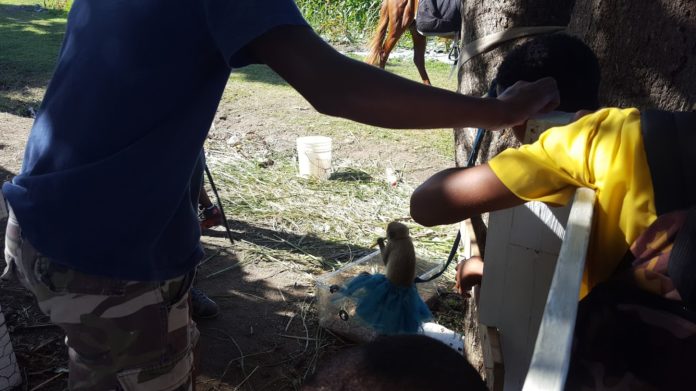
BASSETERRE, St. Kitts (Friday 8th March 2019)-Across the island, monkeys continue to give farmers a tough time and more so at a growing pace according to information revealed at the annual review and planning meeting put on by the Department of Agriculture, held on Tuesday 5th March at the St.Kitts Marriott Hotel.
Director of Agriculture Melvin James told that “monkeys and wild pigs is a persistent problem.”
Specifically, in relation to the monkey situation, he commented that “it is more than we can handle” whilst giving an insight into plans to address the ongoing issue which is affecting crops.
At present, there is no numerical information to back the animals’ (both monkeys and pigs) destruction to the agricultural sector.
“So we find that we have not collected any data in the past so I can’t tell you exactly how much damage we have or how much crop loss has taken place because of pigs and monkeys but that is something that we need to do and that is something that we’re going to be doing this year because the number of animals have intensified, the amount of damage have intensified and I believe that is one of the factors too that is affecting our overall yields so we need to do that…,” James remarked.
He informed that his department has a GEF/FAO [Global Environment Facility/ Food and Agriculture Organisation)-sponsored programme “which looks at invasive species and in particular monkeys and how they are impacting us,” James stated.
“We’re mostly focusing on how they are impacting crops; how they destroy the watermelons, how they eat the pumpkin and so on,” he added.
James shared that the monkeys are destroying the natural environment of the island pertaining to certain plants and species of birds.

“They are also destroying the natural environment. There are certain birds that their numbers have gone done because the monkeys are eating the eggs and young. There are certain plants…that you cannot find as easily in the forest because the monkeys are eating them and as it were destroying the numbers because there are too many. Trees like breadfruit and breadnut; those kind of trees in the forest, the monkeys are killing them because they are stripping them, and so it’s not just agriculture that they are damaging. So, this study is going to look overall as to the impacts that they’re having but of course with all of that we cannot address our problem if we don’t cull; we have to bring down the numbers.”
He continued: “They are more than we can [handle]; Whether it’s a 100,000 or 40,000, we may not be exactly certain [but] what we’re certain of is it is more than we can handle and we need to bring the numbers down so we will continue our ways of trapping and culling so that when we produce something it can actually reach on our plates; it can reach on our table.”
The Agriculture Department official told individuals to contact the Ministry of Environment too when making complaints about monkeys.
“One of the things I want to plant in our minds. Yes, I agree with you to call the Department of Agriculture and ask what we’re doing about monkeys [but] I think you should also call the Ministry of Environment. I think you are giving them an easy time; you’re taking them off the hook. Monkeys come into our farms but where do they live, where do they belong? They live mostly in the natural environment- in the ghauts, in the forest which is a factor of the environment and sustainable development,” James said.
“I think just like us, they have a responsibility to seek to manage. Let us broaden the debate. As we talk about what’s happening, we also need to engage them. Nonetheless, we continue to do our part in trying to manage these animals,” he remarked.
Minister of Agriculture Eugene Hamilton while focusing on the need for efficient work expressed: “I heard about some uncertainties about the real damages from monkeys, what the real damage is from pigs…it tells me that we have gaps to fill because we ought to be closer to the real figure of loss… if we know that it is a problem area in agriculture.”