By Spokesman Newsroom
BASSETERRE, St. Kitts (Thursday 30th April 2026) u2014 As workplaces across the Caribbean region continue to evolve, a critical but often overlooked issue is gaining sharper focusu2014how burnout, fatigue and psychosocial risks are silently undermining worker well-being and productivity.
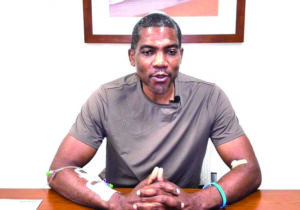
Director of Occupational Safety and Health (OSH) Department at the Tobago House of Assembly Marisa Bhawanie White, brought this concern into view as she addressed a live webinar, hosted by the Cipriani College of Labour and Cooperative Studies (in Trinidad and Tobago) on Tuesday 28th April, 2026 which marked the observance of World Day for Safety and Health at Work.
That online session was held under the theme u2018The Psychological Working Environment: Global Developments and Pathways for Action.u2019
Bhawanie White made it clear from the outset that workplace safety must no longer be viewed through a purely physical lens.
u201cSo when we think about workplace safety, we often just focus on the physical hazards but psychosocial risks are just as important,u201d she stated. u201cFactors that were mentionedu2026like stress, fatigue, and poor work design, they can directly impact performance and increase the risk of incidents.u201d
According to Bhawanie White, there has been a significant shift in how occupational safety and health is approached globally, with psychosocial risks now treated with the same level of importance as physical hazards. u201cPsychosocial risks directly affect health, safety and organizational performance, and theyu2019re not just personal issues,u201d she emphasized, noting that modern OSH systems now integrate these risks into formal risk management processes.
Bhawanie White explained that when these risks are not properly managed, they trigger a chain reaction that affects both workers and organizations.
u201cNow when these risks are unmanaged they lead to fatigue, poor decision making and ultimately increase the likelihood of errors and incidents in the workplace,u201d she said.
She further outlined how workplace stress develops and impacts workers on a day-to-day basis, particularly in environments characterized by high workloads, tight deadlines and workplace conflict.
u201cThis stress, which is both physiological and cognitive, then leads to fatigue, reduced concentration and slower reaction time,u201d Bhawanie White explained, pointing to the direct link between mental strain and declining performance.
As she noted, these conditions do not remain isolated at the individual level but translate into broader workplace risks.
u201cAnd then you have the performance decline in the form of human errors, as these conditions increase the likelihood of mistakes and unsafe decisions,u201d she added.
Bhawanie White also highlighted that organizations often begin to see warning signs before serious incidents occur.
u201cSo youu2019ll often see early warning signs like absenteeism, low productivity and conflict within teams,u201d she stated, emphasizing that these indicators point to deeper systemic challenges.
She warned that prolonged exposure to such conditions can have serious health consequences for workers.
u201cProlonged exposure to stress can lead to anxiety, burnout, sleep issues and even long-term health conditions,u201d Bhawanie White said.
Beyond the human toll, she underscored the significant economic impact of psychosocial risks, noting that the effects of burnout and fatigue extend into organizational performance and national productivity.
u201cOrganizations like the World Health Organization and the International Labor Organization estimate that mental health conditions cost the economy around $1 trillion annually in lost productivity,u201d she noted, adding that these losses are often hidden within absenteeism, staff turnover and reduced efficiency.
Bhawanie White stressed that addressing these issues is not optional, but a clear responsibility for employers.
u201cOccupational safety and health legislation establishes a clear duty of care for employers to provide a safe system of work, and importantly, that duty goes beyond physical hazards, it includes psychosocial hazards as well.u201d
She pointed out that employers must actively identify and manage risks such as excessive workload, workplace bullying and poor job design, rather than relying solely on surface-level interventions.
u201cThe biggest mistake is starting at the bottom when the real solution is fixing the system from the top,u201d Bhawanie White stated, cautioning against approaches that focus only on individual coping rather than addressing root causes.
She emphasized that meaningful change requires structural adjustments, including better workload distribution, adequate staffing and realistic deadlines.
At the same time, Bhawanie White highlighted the importance of creating safe spaces for workers to raise concerns.
u201cItu2019s also critical to have confidential reporting mechanisms, such as hotlines or digital platforms, where workers can raise concerns safely without any fear of retaliation or victimization,u201d she said.
Worker involvement, she added, is essential to effectively managing these risks.
u201cWe need to engage employees through surveys, focus groups, toolbox talks to identify any issues they may have, such as workload, bullying and role ambiguity.u201d
White reinforced that managing burnout and fatigue is not simply about employee well-being, but about strengthening overall workplace performance and resilience.
u201cPsychosocial risk management is not an add-on, itu2019s a core part of modern safety systems,u201d she remarked. u201cSo this is about protecting people, strengthening performance and building resilience and driving sustainable success.u201d