
Choose a plan to become a member of the

St. Kitts-Nevis Trades & Labour Union

Choose a plan from below, subscribe, and get access to our member benefits!

Monthly plan

Yearly plan

Member Benefits Include

  • Collective Representation
  • Legal Representation
  • Grievance Resolution
  • Professional Development
  • Health and Safety Advocacy
  • Social and Networking Events
  • Governmental Advocacy
  • Job Security and Seniority Advocacy
  • Information and Resources
  • Open Door Policy
  • Workers Representation on a National Scale

Collective Bargaining Representation

The union negotiates collective bargaining agreements on behalf of its members to ensure fair wages, benefits, and working conditions. Shop stewards act as liaisons between the workers and the union leadership.

Legal Representation

Members have access to legal assistance for workplace-related issues, such as unfair dismissal, discrimination, and safety violations.

Grievance Resolution

The SKNT&LU supports members in resolving workplace grievances, advocating for fair treatment and due process.

Professional Development

The union provides opportunities for members to enhance their skills and career prospects through various educational programs.

Health and Safety Advocacy

A key focus is on promoting safer work environments and compliance with health and safety standards.

Social and Networking Events

Members can participate in events that foster community and provide networking opportunities.

Governmental Advocacy

The union lobbies for policies and legislation that protect and advance workers' rights and interests.

Job Security and Seniority Advocacy

Efforts are made to ensure fair practices regarding layoffs, promotions, and other job changes, often prioritizing seniority and performance.

Information and Resources

The union keeps members informed about labor rights, industry developments, and union activities through various communication channels.

Open Door Policy

Members have direct access to union representatives for guidance and support, with non-members also encouraged to engage with the union.

Workers Representation on a National Scale

The SKNT&LU represents workers at the national level on various committees, influencing policies and regulations affecting labor and employment.

Search for an article

HomeGeneral NewsRegional NewsWHO: 10 Per Cent of Medicines in Caribbean and Other Developing Countries...

WHO: 10 Per Cent of Medicines in Caribbean and Other Developing Countries Either Fake or Below Standard

Published on

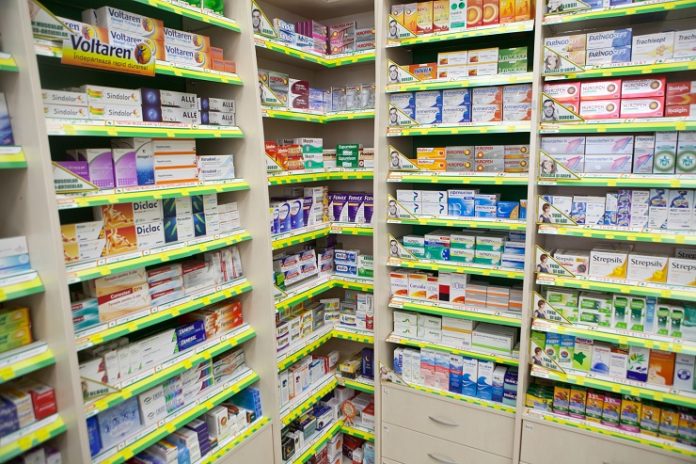
WASHINGTON, United States, Monday December 4, 2017 – An estimated 1 in 10 medical products circulating in low- and middle-income countries, including those in the Caribbean, is either substandard or falsified, according to new research from the World Health Organization (WHO).

This means that people are taking medicines that fail to treat or prevent disease. Not only is this a waste of money for individuals and health systems that purchase these products, but substandard or falsified medical products can cause serious illness or even death.

“Substandard and falsified medicines particularly affect the most vulnerable communities,” says Dr Tedros Adhanom Ghebreyesus, WHO Director-General. “Imagine a mother who gives up food or other basic needs to pay for her child’s treatment, unaware that the medicines are substandard or falsified, and then that treatment causes her child to die. This is unacceptable. Countries have agreed on measures at the global level – it is time to translate them into tangible action.”

Since 2013, WHO has received 1500 reports of cases of substandard or falsified products. Of these, antimalarials and antibiotics are the most commonly reported. Most of the reports (42%) come from the WHO African Region, 21% from the WHO Region of the Americas, and 21% from the WHO European Region.

This is likely just a small fraction of the total problem and many cases may be going unreported. For example, only 8% of reports of substandard or falsified products to WHO came from the WHO Western Pacific Region, 6% from the WHO Eastern Mediterranean Region, and just 2% from the WHO South-East Asia Region.

“Many of these products, like antibiotics, are vital for people’s survival and wellbeing,” says Dr Mariângela Simão, Assistant Director-General for Access to Medicines, Vaccines and Pharmaceuticals at WHO. “Substandard or falsified medicines not only have a tragic impact on individual patients and their families, but also are a threat to antimicrobial resistance, adding to the worrying trend of medicines losing their power to treat”.

Prior to 2013, there was no global reporting of this information. Since WHO established the Global Surveillance and Monitoring System for substandard and falsified products, many countries are now active in reporting suspicious medicines, vaccines and medical devices. WHO has trained 550 regulators from 141 countries to detect and respond to this issue. As more people are trained, more cases are reported to WHO.

WHO has received reports of substandard or falsified medical products ranging from cancer treatment to contraception. They are not confined to high-value medicines or well-known brand names and are split almost evenly between generic and patented products.

In conjunction with the first report from the Global Surveillance and Monitoring System, WHO is publishing research that estimates a 10.5% failure rate in all medical products used in low- and middle-income countries.

This study was based on more than 100 published research papers on medicine quality surveys done in 88 low- and middle-income countries involving 48 000 samples of medicines. Lack of accurate data means that these estimates are just an indication of the scale of the problem. More research is needed to more accurately estimate the threat posed by substandard and falsified medical products.

Based on 10% estimates of substandard and falsified medicines, a modelling exercise developed by the University of Edinburgh estimates that 72 000 to 169 000 children may be dying each year from pneumonia due to substandard and falsified antibiotics. A second model done by the London School of Hygiene and Tropical Medicine estimates that 116 000 (64 000 – 158 000) additional deaths from malaria could be caused every year by substandard and falsified antimalarials in sub-Saharan Africa, with a cost of US$ 38.5 million (21.4 million – 52.4 million) to patients and health providers for further care due to failure of treatment.

Substandard medical products reach patients when the tools and technical capacity to enforce quality standards in manufacturing, supply and distribution are limited. Falsified products, on the other hand, tend to circulate where inadequate regulation and governance are compounded by unethical practice by wholesalers, distributors, retailers and health care workers. A high proportion of cases reported to WHO occur in countries with constrained access to medical products.

The WHO said that modern purchasing models such as online pharmacies can easily circumvent regulatory oversight. These are especially popular in high-income countries, but more research is needed to determine the proportion and impact of sales of substandard or falsified medical products.

It added that globalization is making it harder to regulate medical products, with many falsifiers manufacture and print packaging in different countries, shipping components to a final destination where they are assembled and distributed. Sometimes, offshore companies and bank accounts have been used to facilitate the sale of falsified medicines.

“The bottom line is that this is a global problem,” says Dr Simão. “Countries need to assess the extent of the problem at home and cooperate regionally and globally to prevent the traffic of these products and improve detection and response.”

Latest articles

Prime Minister Drew Receives Full State Honours At Jubilee House During Official Visit To The Republic Of Ghana

Prime Minister of Saint Kitts and Nevis, the Honourable Dr. Terrance Drew, was formally welcomed on March 04, 2026, to Jubilee House in Accra by the President of the Republic of Ghana, His Excellency John Dramani Mahama, as part of his Official State Visit to the West African nation.

IMF Acknowledges Tourism Recovery and Positive Growth Outlook for St. Kitts and Nevis

The International Monetary Fund (IMF) has recognized the continued recovery of Saint Kitts and Nevis’ tourism sector and projected stronger economic growth ahead, affirming the positive trajectory of the Federation’s economy under the leadership of the Drew-led Government of Saint Kitts and Nevis.

FinCEN Rescinds 2014 Advisory – A Milestone Achievement For Saint Kitts And Nevis

The Advisory, originally issued on May 20, 2014, raised concerns regarding the abuse of the CBI Programme by certain foreign individuals. On February 24, 2026, FinCEN officially rescinded that Advisory. This development marks a significant milestone in the Government’s sustained and comprehensive reform of the CBI Programme over the past three years.

Experts Finalizing Engineering Designs as Nevis’ Airport Expansion Project Advances

Providing an update during his February 24 monthly press conference, Premier of Nevis and Minister of Tourism, the Honorable Mark Brantley, said the much-anticipated multi-million-dollar capital project is progressing following the receipt of key geotechnical data in recent weeks.

More like this

Prime Minister Drew Receives Full State Honours At Jubilee House During Official Visit To The Republic Of Ghana

Prime Minister of Saint Kitts and Nevis, the Honourable Dr. Terrance Drew, was formally welcomed on March 04, 2026, to Jubilee House in Accra by the President of the Republic of Ghana, His Excellency John Dramani Mahama, as part of his Official State Visit to the West African nation.

IMF Acknowledges Tourism Recovery and Positive Growth Outlook for St. Kitts and Nevis

The International Monetary Fund (IMF) has recognized the continued recovery of Saint Kitts and Nevis’ tourism sector and projected stronger economic growth ahead, affirming the positive trajectory of the Federation’s economy under the leadership of the Drew-led Government of Saint Kitts and Nevis.

FinCEN Rescinds 2014 Advisory – A Milestone Achievement For Saint Kitts And Nevis

The Advisory, originally issued on May 20, 2014, raised concerns regarding the abuse of the CBI Programme by certain foreign individuals. On February 24, 2026, FinCEN officially rescinded that Advisory. This development marks a significant milestone in the Government’s sustained and comprehensive reform of the CBI Programme over the past three years.
Exit mobile version