




By: Spokesman Newsroom
BASSETERRE, St. Kitts (Monday 5th March 2026) – “Trinidad and Tobago or any other country being invited to a meeting [in the US] does not fragment CARICOM at all.”
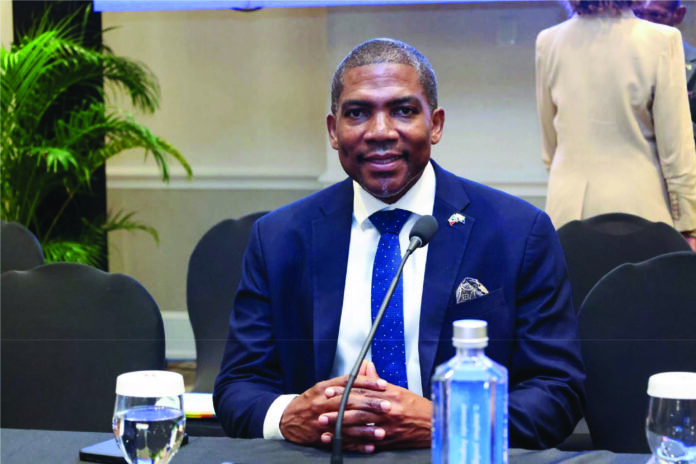
That was the response, in part, from Chairman of CARICOM, Prime Minister of St.Kitts-Nevis Dr. Terrance Drew when he addressed question from a reporter during the press conference for the 50th Regular Meeting of the Conference of Heads of Governments of CARICOM held on Friday 27th February 2026 at the St.Kitts Marriott Hotel.
He was at the time responding to queries about whether the regional body was facing division amid reports that some member states were preparing to meet with the United States President Donald Trump.

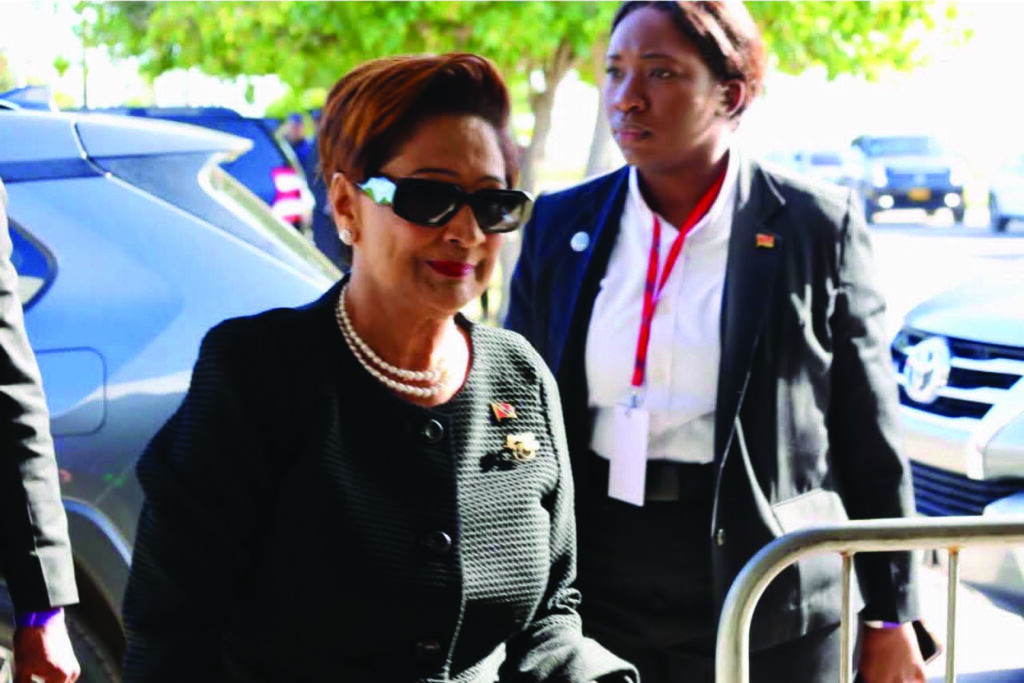
The question was posed by a journalist from CBC Barbados pointed out during the line of questioning that “…we know that next week, Trinidad and Tobago, as well as Guyana, are invited to meet with President Trump. Prime Minister Drew, is CARICOM today experiencing an unprecedented level of fragmentation?”
In response, Dr. Drew rejected the suggestion of division within the regional bloc.
“Thank you for your question. CARICOM is not experiencing any levels of fragmentation,” he said.
He further explained that the structure of the regional organization allows for individual foreign policy decisions by its member states.
“I think that this meeting demonstrates our commitment to CARICOM as a strong organization. CARICOM does not have a homogeneous, I would say, or a single foreign policy. That is left up to sovereign states. CARICOM might seek to coordinate, but each state, as was mentioned before, has the opportunity to determine what would be its foreign policy agenda,” he stated.
He added that CARICOM is not designed as a political union.
“If you look at CARICOM, CARICOM is not a political union and one has to also understand what CARICOM is about. And so, Trinidad and Tobago or any other country being invited to a meeting does not fragment CARICOM at all,” Dr. Drew said.
He continued: “As was mentioned before, the fact that different persons within CARICOM or different states within CARICOM can have relationships that span the whole spectrum of relationships in terms of country to country and so forth, that can actually enrich CARICOM, but it does not fracture CARICOM.”
The CARICOM Chairman also maintained that there was no evidence to support claims of division.
“There is no instance or evidence that this is fracturing CARICOM. Are there some differences? Yes, but fracturing, I think, is a very, very strong word at this particular time,” he added.
The reporter followed up with another question on regional unity, quizzing on the topic about at what point does collective positioning on major geopolitical issues, especially when it is happening within the region override national interests.
Dr. Drew responded that national interests remain central to each member state.
“I think every country acts within its national interests at any given point. I don’t know if you are referring to something else, but I don’t think anything at all would overwrite anybody’s national interest,” he said.
Returning to the earlier concern about unity within the regional body, he reiterated his position.
“But I think I come back to the heart of your question. Is CARICOM being fragmented as a result of any of this? Not at all. I think this is giving CARICOM the opportunity to look at this and look for areas in which it can strengthen itself,” Dr. Drew said.
“And these things were discussed at multiple levels but I can say CARICOM is committed to remaining as a unit, as an entity, as a viable entity for moving the Caribbean community forward, and this is not a sign of fragmentation at all,” he added.
At the close of the press conference, the CARICOM Chair also addressed the media, acknowledging that while the region faces challenges, leaders remain committed to working together.
“Your questions were relevant and your question is seeking to get the best information that could be had with respect to a number of issues and challenges that are affecting the community,”he said.
“I am not going to pretend here, and I’m sure you’re not pretending, that there are not challenges. There are challenges. I’ve never hit that and we have never hit that and we will never, ever hide that,” he stated.
“However, coming out of this meeting, acknowledging those challenges, we have worked together to ensure that we can confront them in the best manner possible,” the Chair added.
He also pointed to the participation of regional leaders at the summit as evidence of unity.
“The fact that all the full members showed up, the fact that they were part of the discussions and the deliberations, significant decisions were reached, showed that there is no fragmentation, but I would say more togetherness, even though there are challenges that we are facing at this particular time,” he said.
Dr. Drew concluded by further highlighting the region’s shared objectives.
“And the CARICOM will continue to work for the well-being of all of the people in the region. All of the leaders are committed to that. We’ll continue to work for stability, and we’ll continue to work to do our part to make this world a better place,” he said.