




By: Spokesman Newsroom
BASSETERRE, St.Kitts (Thursday 26th February 2026)-“Cooperation is critical. Collaboration is critical but the same way Nevis cannot stand in the way of St. Kitts’s development, St. Kitts equally should not be able to stand in the way of Nevis’s development.”
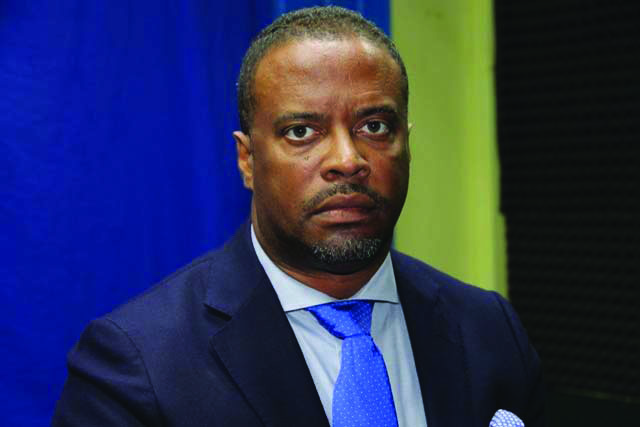
So said Premier Mark Brantley on the topic of the proposed Destiny development in Nevis, as he addressed the matter during his monthly press conference held on Tuesday 24th February 2026, expressing “All we’re waiting for is for a green light.”
Responding to a reporter’s question about a recent federal press release announcing the establishment of an Ad Hoc Committee and Independent Oversight Body, Brantley was asked whether the move would further delay the project and whether consultations in Nevis had revealed concerns that might require legislative changes.
The reporter noted that under the Act, the Independent Oversight Body’s mandate is to examine the application and provide written opinions to the federal Cabinet on matters including compliance with statutory prerequisites, the developer’s financial, organizational and technical capacity, economic projections, governance implications, and environmental and fiscal risk exposure.
Brantley made it clear that the legislation does not require such a committee.
“So, the short answer is if you look at the legislative requirement in that act – and I was there during the parliamentary debate, I supported that bit of legislation- it does not mandate anything.
It says ‘may.’ That’s the first thing. So it means that the federal government has chosen to put this committee in place.”
He explained further: “The legislation says that you can put a committee in place to look at the proposal or to look at its implementation. So we in Nevis have said we will put a committee in place to look at the implementation since it’s a Nevis project.”
According to Brantley, the issue is one of choice – and those choices come with consequences.
“So a lot of the issues here are really, in my opinion, choices that are being made and those choices, you are absolutely correct, will lead to delays because if you’re going to appoint a committee, and the intention of that committee is to advise you on all these manner of things, the committee needs time.”
He added: “Whilst you are appointing committees and committees and waiting on committees to advise, what’s happening is the clock is running on financial and commercial commitments that have been made.”
Using a scenario, Brantley painted an image of risks that could be created.
“So, Destiny, for example, would have said, well, listen, we are buying this 100 acres of land for the sake of argument, and the deadline for closing- we’ve already paid deposits and all that – the deadline for closing is, let’s say it’s March 15th, just drawing a reference. If that is a deadline, then any delays that pushes you past that now creates commercial problems.”
“If you can’t meet those deadlines, it either means that those contracts go away, or you have to renegotiate those contracts, and so it injects commercial uncertainty.”
Expressing confusion at the federal intervention, Brantley emphasized that Destiny is a Nevis project.
“And why I’m saying that I am a little confused by this is, obviously, this is a Nevis project. Nevis has a government.”
He stressed that the Nevis Island Administration (NIA) had engaged extensively with stakeholders.
“And the Nevis government has engaged and has engaged extensively… we have met with the chamber, the bankers’ association, the churches, the youth, the teachers, the truckers, the hoteliers, the police high command, the parliamentary opposition. We have met with the Honourable Attorney General as a Cabinet. We had a general town hall meeting.”
In response to whether legitimate concerns had emerged during consultations, Brantley said plainly: “Absolutely. Each time we met, we took back concerns that were raised, and we had those addressed in terms of our negotiations.”
He underscored that the people of Nevis elected a government to manage their affairs.
“Well, the people of Nevis have elected a government to take care of their needs.”
He described the investment as transformative.
“The government of Nevis has been able to attract a significant investment to Nevis that even the naysayers have to admit that it will advance this island in a significant way- perhaps a way that we have not seen since the coming of the Four Seasons in terms of a private investment.”
Brantley also pointed to declining Citizenship by Investment revenues.
“I have just seen some numbers there from revenue for the CBI, and the numbers are now – I mean, to say paltry might not even be the appropriate word. With the impending demise of citizenship by investment, we need alternatives. We need alternatives.”
He then framed the matter as a constitutional imbalance within the Twin Island Federation.
“If this project were on St. Kitts, the people of Nevis would have no say. The NIA, the Premier, the Cabinet would have no say in whether that project moves forward. So ask yourself that question.”
“You have no say in what happens in St. Kitts. Zero. But St. Kitts can determine how far Nevis goes.”
Referencing the Christophe Harbour development, he asked: “Do you remember there’s a project called Christophe? Who asked the people of Nevis whether they wanted Christophe Harbour? Christophe Harbour closer to Nevis than it is to Basseterre but nobody asked us.”
Brantley insisted that development decisions in Nevis should ultimately be settled by Nevisians.
“The people of Nevis have chosen a government whether it’s NRP, CCM or who, and that government is who the people of Nevis have reposed trust and confidence in to run their affairs. If they say they want a chicken farm and there is controversy or dispute over the chicken farm, then it is for the people of Nevis to decide that controversy at an election.”
Detailing the timeline, he said: “We have gone through this process from August of last year until December. August, September, October, November, December -almost five months. All that occupied us as a Cabinet- not all, but a significant part of what occupied us- was this project. We examined it, we discussed, we met. That had nothing to do with people who sent private communication like the Nevis Historical and Conservation Society sent something. So we had exhaustive engagements.
According to him: “No project in this country has ever attracted that level of public engagement.”
Brantley said some Nevisians are already preparing for the project’s start.
“I met a young fellow on Saturday… and he said that he and another gentleman have already identified some heavy equipment that they want to purchase. People who are forward-looking and entrepreneurial are already trying to ready themselves for this… All we’re waiting for is for a green light.”
Returning to the issue of fairness, Brantley stated: “… if St. Kitts has the capacity to say to Nevis, you cannot have a particular development on Nevis, then it would seem to me only just and right that Nevis has the capacity to say to St. Kitts, you cannot have a certain development in St. Kitts. And we know that that can’t happen. As the local people say, fowl would grow teeth before that happens.”
He highlighted: “We cannot have development on this island of Nevis being held up, being stymied, being delayed and potentially being lost because of delays on St. Kitts.”
“St. Kitts can develop St. Kitts, so why can’t Nevis develop Nevis?”